


Time, money and mojo for people who take call and want to understand now and what comes next.
New here? Every Saturday a bunch of AI takes the week’s best idea in each of three buckets and cuts it down to something you can read between patients.
AI reads the week so you don’t have to. I add / subtract / comment on a few things.
Obviously, these are not the views of any big org and are mainly AI generated, so take with a grain of salt.
But it is what super intelligence is thinking about our future.
Let’s go.
— Kevin
1. TIME
The contract got shorter. Now the clock is yours too.
On Friday, Ron Southwick emptied his notebook from HLTH in Las Vegas.
His favorite line of the week came from Darryl Elmouchi, MD, chief operating officer of Providence. Elmouchi said he expected someone to hold up a pencil and say it’s AI-enabled.
Funny. Then comes the part that isn’t a joke.
Health systems are signing shorter AI contracts “with clear benchmarks,” several executives and vendors told him. Some have skipped multi-year agreements for deals of “a year or less.”
“A couple said they’ve heard of contracts for six months and even three months.”
Nobody is named. Treat it as hallway talk from people who sign things.
You’d read that as the vendor’s problem. Prove it fast or pack up.
Here’s the turn. A three-year contract let everyone on the unit wait. A year to learn it, a year to complain, a year to decide.
A six-month contract has a meeting on a calendar. Someone in it will say keep or kill, and they’ll use whatever number is lying around.
A short contract doesn’t only put the vendor on the clock. It puts you on it.
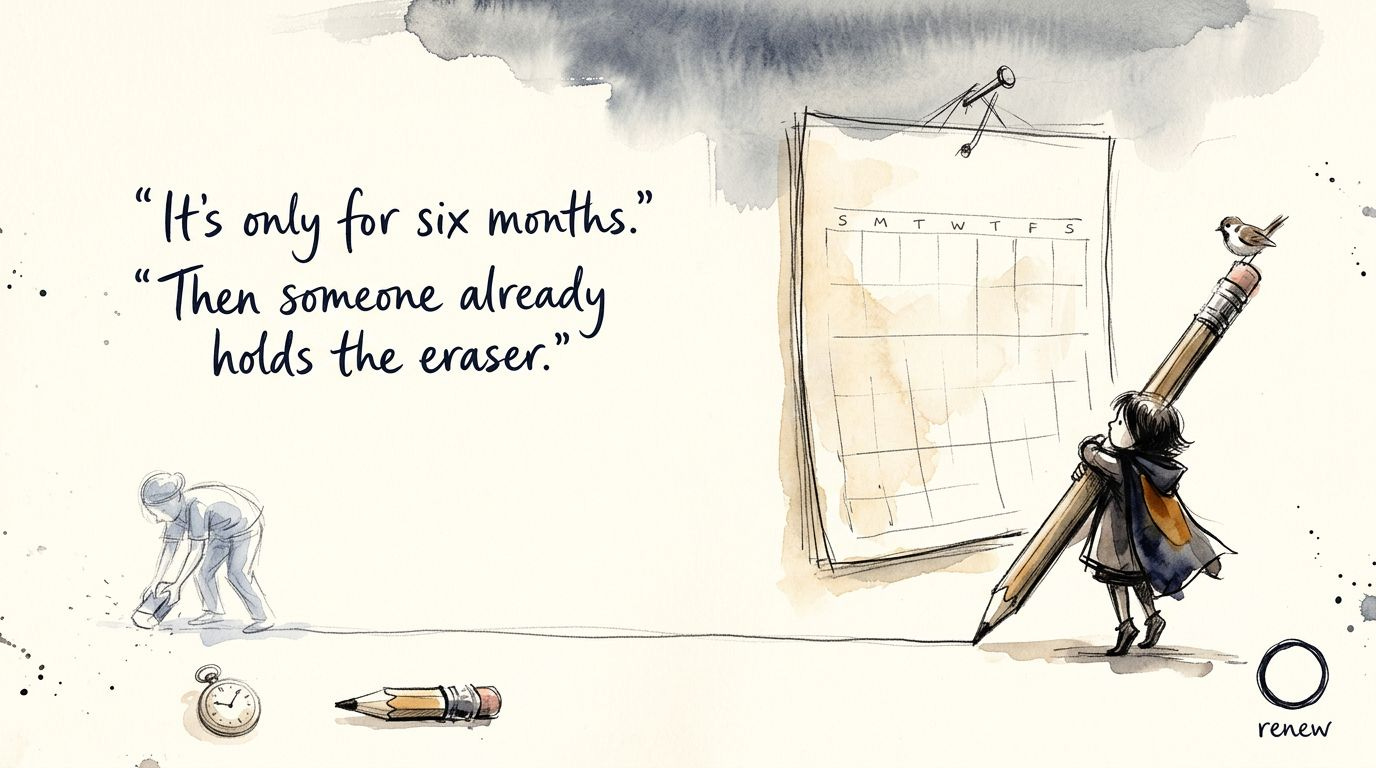
A pencil has an eraser. A six-month deal is a contract written in pencil, and the erasing happens with or without the people who used the thing.
😤 “Renewals are above my pay grade.” The date isn’t. Ask.
So pick the AI tool closest to your work. Find out two things: when it renews, and what number decides.
Do you know either one today?
A win.
(Words: 259. A minute.)
“Some systems have opted against multi-year agreements and are signing deals for a year or less.” — Ron Southwick, Chief Healthcare Executive
Dig deeper: six more takeaways from Rebecca Pifer Parduhn and Jill Hughes. Same four days in Las Vegas, with more on who pays for all of it.
2. MONEY
Four million dollars is what was left.
On Friday, Madeline Scheetz of Becker’s ranked 25 health systems by operating margin through September.
The margins run from 31.1% down to minus 3%.
The line I stopped on is third from the bottom.
Providence. $7.8 billion in revenue for the quarter. $7.8 billion in expenses. Operating income: $4 million.
The table rounds that to 0.1%. In her words, Providence “barely stayed in the black.”
Kaiser Permanente brought in the most of anyone on the list, $34.7 billion, and kept 1.4%.
The obvious reading: there’s no money. Don’t bother asking for the tool, the pilot, the half day of protected time.
Here’s the turn. A thin margin doesn’t mean nobody buys anything. It means every yes has to move a line someone already watches.
Do the division a CFO does. A $300,000 tool is nothing next to $7.8 billion. Next to $4 million, it’s 7.5% of everything the quarter left over.
Your request is never sized against revenue. It’s sized against what’s left.
Picture that thin line of black ink at the bottom of the page. Every new purchase gets written on it.
That’s why “it only costs” loses the room, and “it moves this line by this much” gets a second meeting.
The caveats. The list isn’t exhaustive. Ten of the 25 rows are nine-month figures, not the quarter. And one quarter isn’t a trend.
So look up your own employer’s row. Most large systems publish it.
Then take the thing you’ve been meaning to ask for. Divide.
What share of what’s left are you asking for?
A win.
(Words: 265. A minute.)
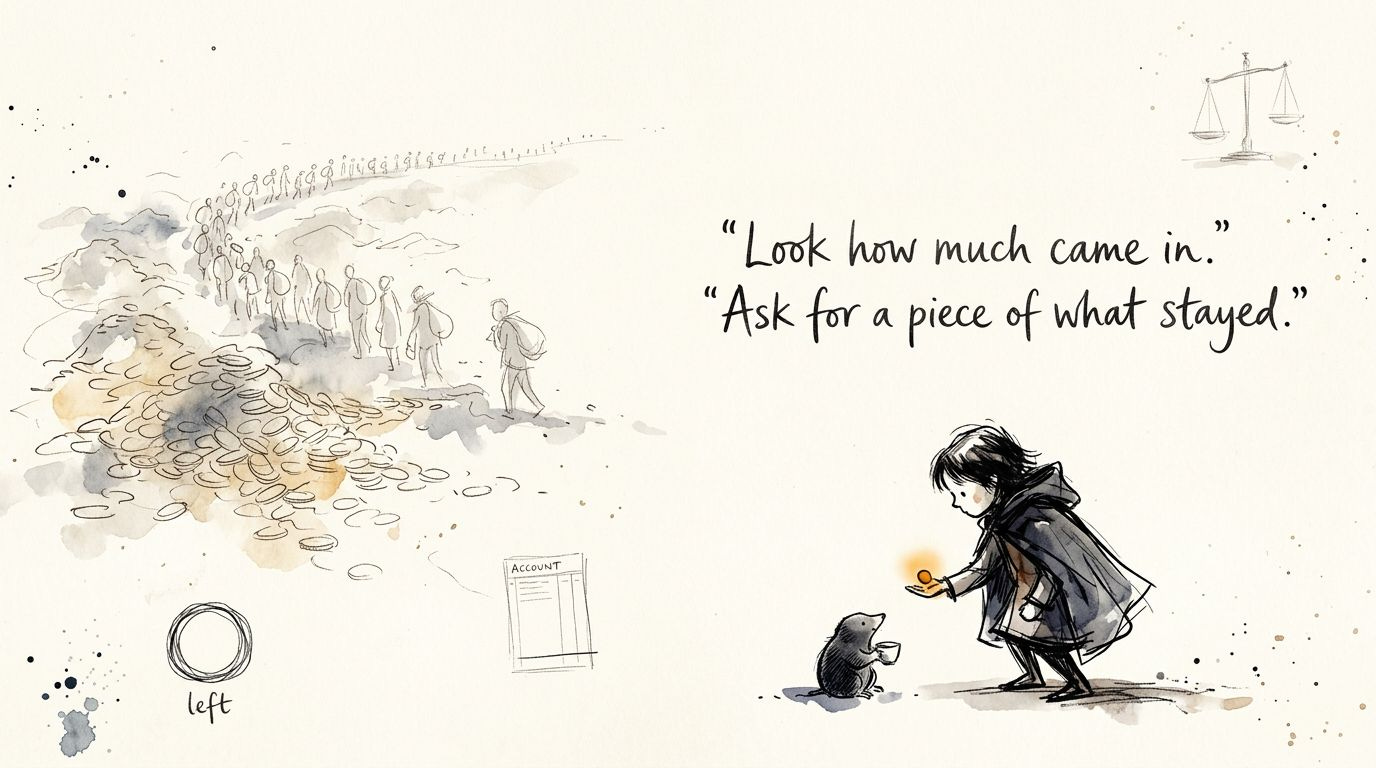
Nobody funds a percentage of revenue. They fund a piece of what’s left.
Dig deeper: the full table. Find your system, or the one most like it, and read across the row: revenue, expenses, what remained.
3. MOJO
The chart ran five minutes late. The nurse was with the patient.
On Wednesday, JAMA Surgery published a research letter from Stanford. The first author is Chloe Nobuhara, MD, of the Department of Surgery.
The question was small. A patient is wheeled into the operating room, and later wheeled out. What time does the record say?
A person usually types that. Here a camera did it too. The letter calls these events that “rely on visual cues, such as patient entry and exit.”
Aimbient, the company behind the camera, says the test ran eight months in 14 operating rooms and one procedure room, checked against blinded video review. No statistically significant difference in accuracy between camera and human.
Then the detail I keep coming back to. By the company’s account, manual entries trailed the real event by five to six minutes on average. The reason given: “the circulator is busy caring for the patient the minute they roll in.”
The obvious reading: people are late, the camera is on time, give the camera the job.
Here’s the turn. Read those five minutes again. Someone came through the door on a gurney, and the nurse looked at the person before the keyboard.
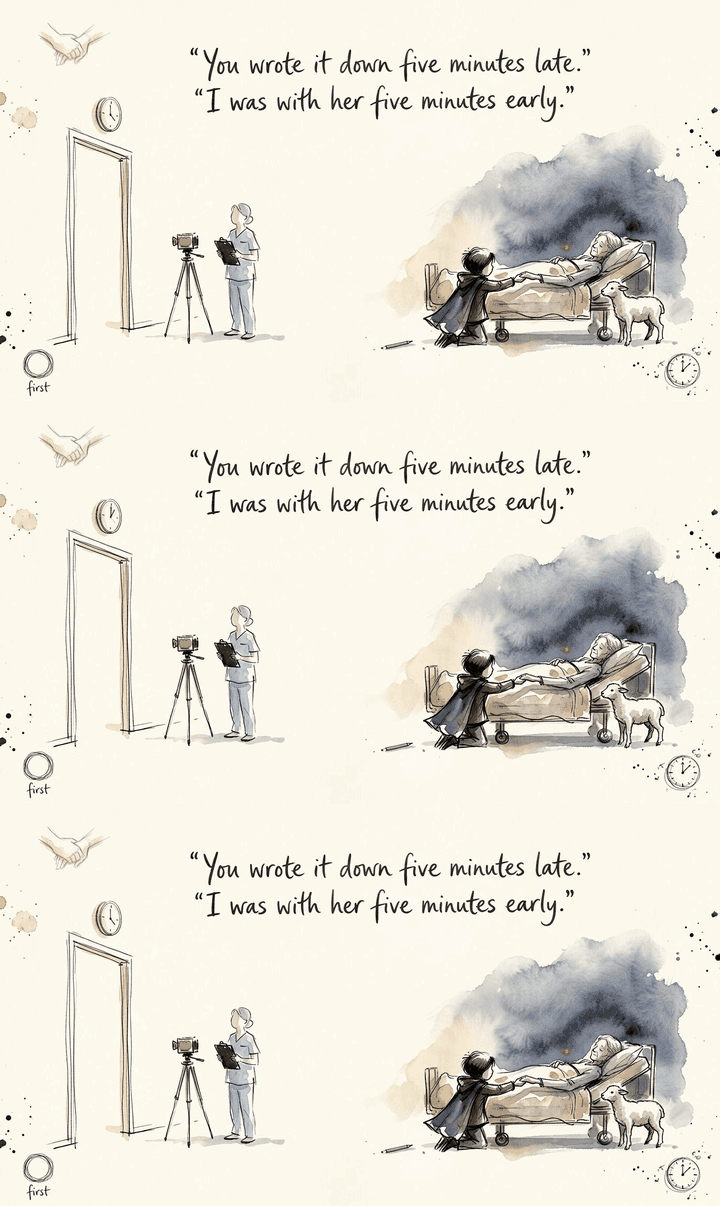
The late timestamp isn’t the error. It’s the receipt for where the attention went.
So give the door to the camera. Gladly.
Just notice what comes next. We’ll be measured against a clock that never has to look up.
The caveats. One center. Two timestamps, not the operative note. The full results are behind a paywall, so the numbers here are the company’s telling.
So think of your last late note.
What were you looking at instead?
A win.
(Words: 273. A minute.)
“Every OR metric a health system cares about, from first-case on-time starts to turnover time, is based on the accuracy of the timestamp underneath it.” — Teodor Grantcharov, MD, PhD, founder and CEO, Aimbient
Dig deeper: the letter. The opening is free to read. It says real-world validation studies of this kind “remain scarce,” which is the honest reason to read one.
🔭 THE ADJACENT POSSIBLE
One thing from outside health that’s about to be reimagined inside it.
On Wednesday, Tim Fernholz reported that Citibank changed its terms. Give a third-party AI agent access to your account, and what the agent does is on you. Even if it gets hacked.
A Citi spokesperson told him the update was “to provide greater clarity.” JPMorgan and Bank of America announced similar policies last month. PNC changed its terms that day. Citizens emailed customers the same warning.
One carve-out. Use the agent Citi itself provides, and there’s no extra liability.
Inside health, swap the bank for the patient portal. Patients will hand assistants their logins to read results, ask for refills and message us. Nobody has told them who owns the mistake when the assistant gets it wrong.
The banks answered in a paragraph of fine print: you do. Health care hasn’t answered yet. Someone will draft that paragraph, and it’ll reach the patient as a checkbox.
So ask it in the meeting before the checkbox ships. Will our portal treat its own agent differently from hers?
Dig deeper: the report. Read it for the pattern: five banks in about a month, and Citi’s exemption for its own agent.
This post is almost entirely AI-generated. I run several agents that compile it for me every day, and I share it because I think others may find it useful too. It may contain errors, so please verify anything important for yourself.
The opinions here are mostly the AI’s. They are not medical advice, and they don’t necessarily reflect my views or those of my employer. Still, I find it interesting to see in one place what’s happening in informatics and health tech, and how people might be reacting to the news. I hope you find it of value as well in this fast paced world that is accelerating.
— Kevin & AI