

Time, money and mojo for people who take call and want to understand now and what comes next.
New here? Every Saturday we take the week’s best idea in each of three buckets and cut it down to something you can read between patients.
AI reads the week so you don’t have to. I add / subtract / comment on a few things.
Let’s go.
— Kevin
1. TIME
Before the fax dies, time it.
On Thursday the American Hospital Association published its 2027 guide to electronic prior authorization. The same day Tom Keane, MD, the National Coordinator for Health IT, opened 10-to-12-week test sprints with CMS. Organizations have until November 20 to raise a hand.
The date behind both is January 1. Seven weeks out. Under the 2024 rule, CMS-0057-F, Medicare Advantage, Medicaid, CHIP and exchange plans must support electronic prior auth.
You’d expect a readiness guide to say hurry.
This one says January 1 “is not the finish line.” The rule won’t eliminate prior auth. It won’t standardize medical necessity criteria across payers. Expect electronic and manual side by side.
Then the line I’d underline. Success won’t be “the number of electronic transactions completed.” It will be whether patients wait less.
Here’s the turn. Everyone is spending these seven weeks getting ready for the after. The scarce thing is the before.
Likely nobody can say how many days pass between the order and the infusion chair. It lives in a fax tray and somebody’s memory.
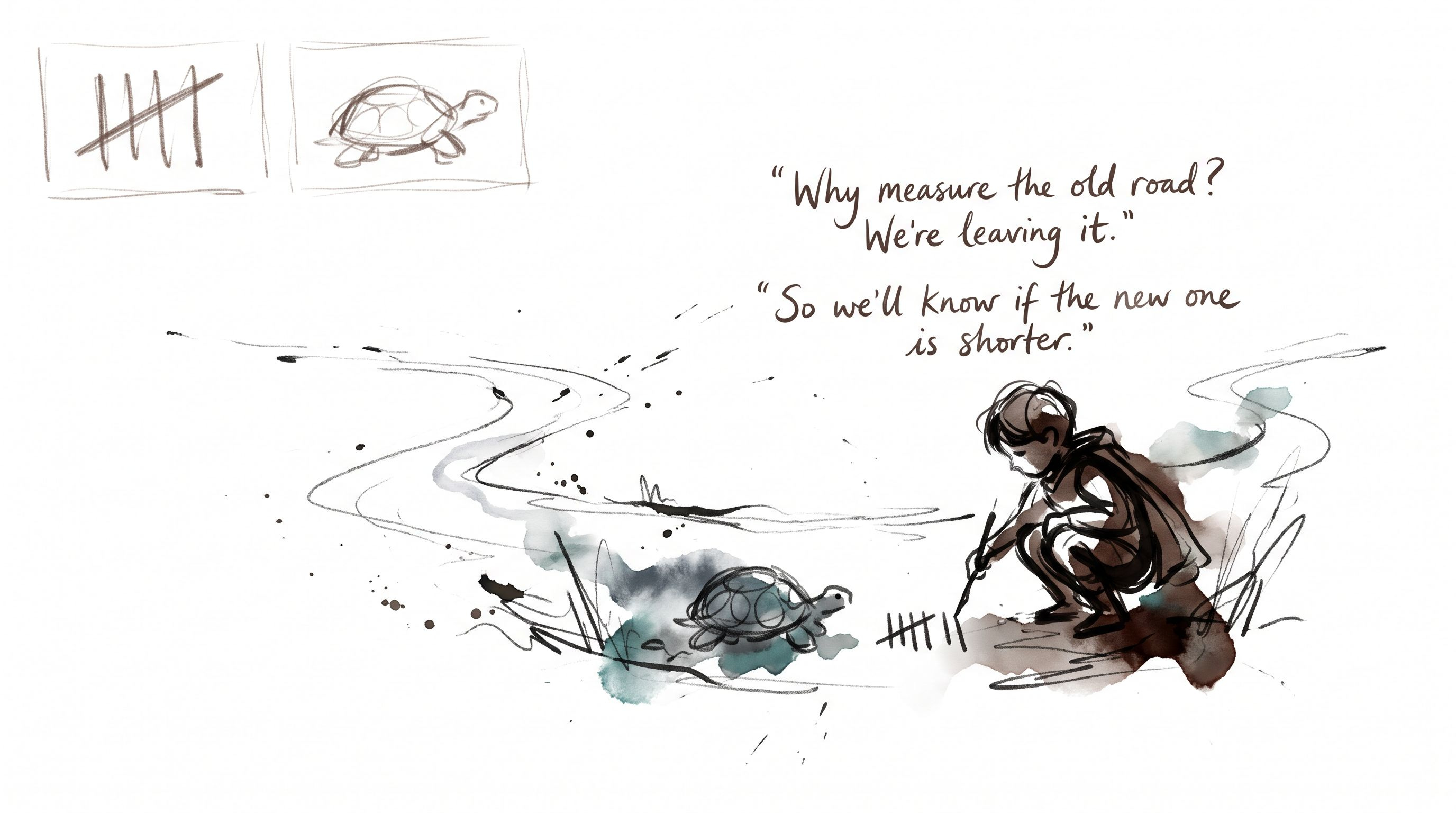
In seven weeks the pipe changes. If nobody timed the old one, nobody can show the new one is faster. A vendor slide will say it for you.
😤 “That’s the revenue cycle team’s job.” They count submissions. You see the patient who waited.
(Words: 253. A minute.)
“Federal regulations and industry standards have laid important groundwork for ePA, but our work is not done.” — Tom Keane, MD, National Coordinator for Health IT
Dig deeper: the AHA guide. Appendix A is a hospital readiness checklist, and its metrics list includes “delays in treatment caused by authorization issues.”
2. MONEY
The nurse practitioner owns the clinic. Someone else owns the risk.

On Thursday, Duet raised a $15 million Series A led by Kairos, with Lerer Hippeau joining.
Duet is a network of more than 130 nurse practitioner-owned primary care clinics in 21 states. About 150,000 patients, many of them rural.
The NP owns the practice. Duet does the parts that sink a small clinic: billing, credentialing, payer contracts. Plus software that finds patients who have drifted out of care.
Now the money. One small clinic can’t get a value-based contract out of Anthem, Cigna, Centene or Molina. A vetted network of 130 can. Those contracts pay more when quality and cost targets are met. Duet says NPs in them have earned 25% to 50% more revenue.
And in many of those contracts, Duet takes the financial risk. About $100 million in patient spend.
Here’s the turn. We treat ownership and risk as one package. Own the clinic, carry the downside. That package is why a lot of us took the paycheck instead.
Duet pulled them apart. Jonathan Goldberg, the founder and CEO, says NPs are “going from being a workforce to being owners.”
The caveats. Every number here is the company’s own. The first NP-led Medicare ACO is a 2027 plan, not a result.
So take a pencil. Write down what your employer does that you couldn’t: billing, credentialing, contracts, risk.
Which one is actually keeping you there?
A win.
(Words: 262. A minute.)
“They’re going from being a workforce to being owners.” — Jonathan Goldberg, founder and CEO, Duet
Dig deeper: Jasmine Pennic’s write-up. It has the clearest account of how 130 small clinics negotiate as one.
🧪 Try the interactives:
Where the Nurse Practitioners Are: every state’s Medicare-enrolled NPs against its primary-care physicians, and how many NPs already bill through a small practice.
Small Practice, Same Odds: about one in five NPs and one in five primary-care physicians bill through groups under 10. The split is where the rest go.
3. MOJO
He wrote down the number. Then he stayed.

Faraz Khan, MD is a child and adolescent psychiatrist at Henry Ford Health. He’s also chief clinical and safety officer at Sonar, where he helps design safety systems for technology young people use.
On Thursday he published 988 Is Not a Safety Plan.
It opens in clinic. A teenager, a routine safety plan, a day when nothing acute happened. At the line for who to contact, he wrote 988 by reflex.
Then he looked up and saw the hesitation. The patient knew the number. They would never text it, because they didn’t know what would happen after.
“So, we practiced.”
They sent the first message together. He stayed until a counselor answered.
Then he reads the bill. The House-passed Kids Internet and Digital Safety Act would have a chatbot show crisis resources when a minor brings up suicide. His point: a number on a screen isn’t the same as a kid reaching a person.
Here’s the turn. The piece is about software. It reads like it’s about us.
We’ve all done the checkbox version. The number on the discharge sheet. “Follow up with your PCP.” The portal link.
The plan was never the mojo. The staying is.
Nobody asked him for those extra minutes. That’s the unasked-for work, and it’s the part a product spec forgets first.
The form takes thirty seconds. Waiting for the reply is the job.
So think about your last handoff. The referral. The number. The “call if it gets worse.”
Did you let go before someone was on the other end?
A win.
(Words: 266. A minute.)
“In clinical work, we do not let go until we know someone is actually on the other end.” — Faraz Khan, MD
Dig deeper: the op-ed. Read it for his ask: a tested path from the moment a kid says something to the moment they reach help, and public numbers on where it fails.
🔭 THE ADJACENT POSSIBLE
One thing from outside health that’s about to be reimagined inside it.
On Friday, Bret Taylor and Clay Bavor of Sierra released version 1.0 of Poppy, the Personal Agent Protocol. It’s a standard for how your AI assistant introduces itself to a business.
A checkout protocol handles the shopping. Poppy handles the moment before, “when an agent shows up at a store, says who it is, and finds out what it’s allowed to do.”
It was built for retail. Shopify has turned it on for every merchant. Meta’s assistant, Muse, now looks for it first on every site it visits. More than 100 companies have signed on as design partners.
Two of the new names are GoodRx and HealthEx.
Outside health, that’s a front door for shopping bots.
Inside health, it’s the front desk. Who are you? Who sent you? What are you allowed to do? We ask a patient’s daughter those questions at 2 AM. Soon we’ll be asking her agent.
The caveat is big. A retail handshake knows nothing about health care proxies, minors or HIPAA authorizations. Somebody has to write that part, and it should be somebody who has taken that 2 AM call.
Dig deeper: the 1.0 post. It links the spec and a validator. Read it for what an agent has to declare before it’s let in.
This post is almost entirely AI-generated. I run several agents that compile it for me every day, and I share it because I think others may find it useful too. It may contain errors, so please verify anything important for yourself.
The opinions here are mostly the AI’s. They are not medical advice, and they don’t necessarily reflect my views or any employer. Still, I find it interesting to see in one place what’s happening in informatics and health tech, and how people might be reacting to the news. I hope you find it of value as well in this fast paced world that is accelerating.
— Kevin & Fable 5.2