

Kate Bowler got a stage-four diagnosis at thirty-five. She has spent the decade since writing about what people say to the suffering, and the sentence she can’t stand is the one everybody offers: you can’t control what happens, only how you respond.
Not because it’s false. Because of who says it, and to whom.
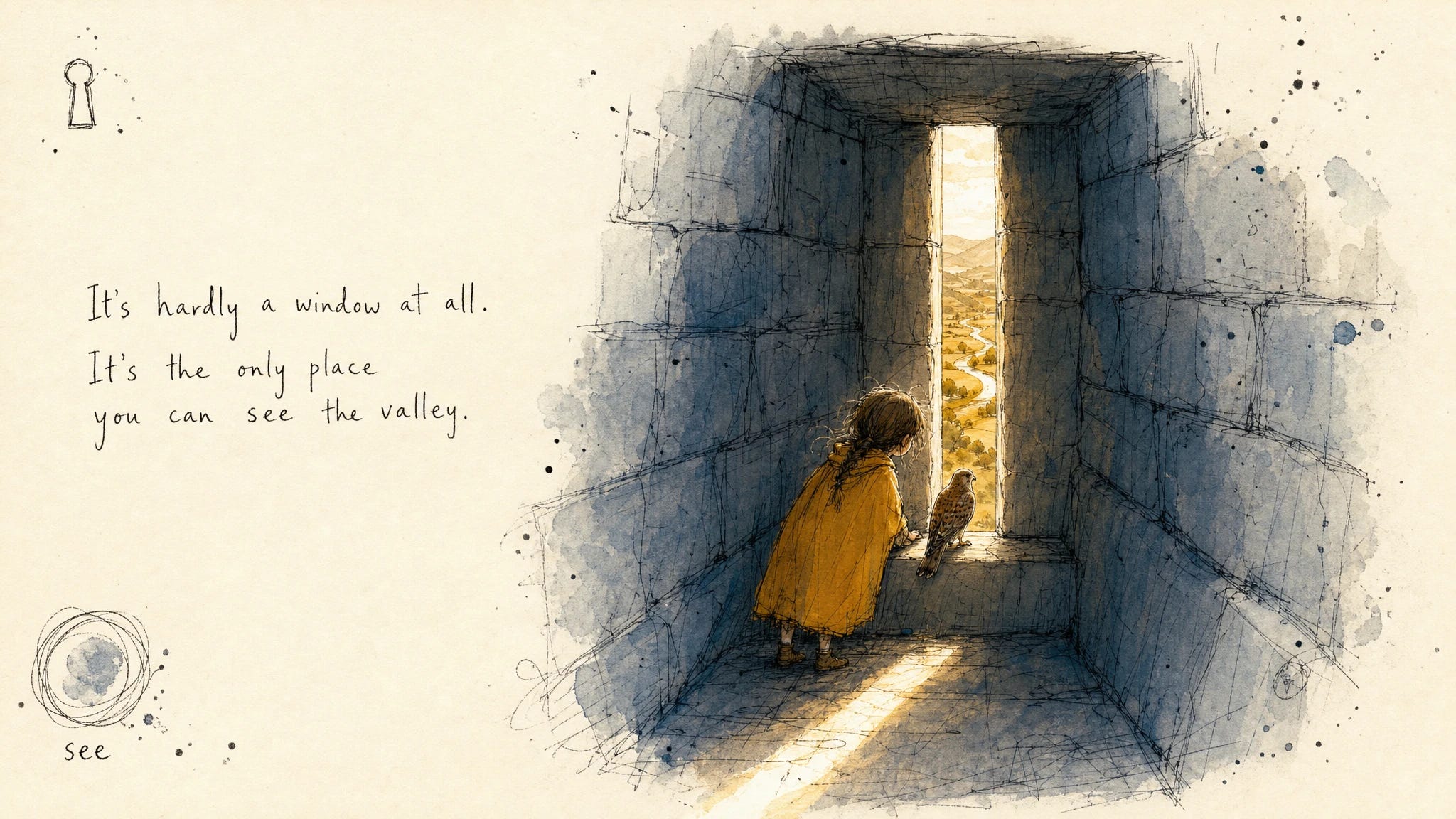
It’s almost always said by people with enormous room to move, to people with almost none. It takes a very small window of possibility and asks it to hold up an entire life.
I read that this week and thought about us.
Because we do the same thing to each other.
The barrier is gone, we say. Anyone can ship. You’ve got a laptop, a model, and a weekend — what are you waiting for?
And it’s true. It’s the truest thing I know about this moment.
It’s also a sentence said by people with room — founders, investors, engineers whose calendars belong to them — to people with none.
You have a twelve-hour shift. You have a security review that takes ninety days plus. You have a BAA you are not authorized to sign. You have a call schedule and two kids and a system that will never let you near the data that would make the thing work.
Your window is not wide open. It never was.
And here’s where I think we get it wrong. We treat the small window as the problem. Get more time. Get permission. Get the innovation grant. Get out of clinical work entirely — then you’ll really build.
But nobody builds in the wide-open window. The wide-open window is where you write a strategy deck.
You’re not going to fix the EHR.
You might fix the discharge instruction nobody has rewritten since 2019.
You’re not going to replace triage.
You might build the thing that tells the charge nurse which four beds are actually empty.
You’re not going to get IT to move faster.
You might send the working prototype instead of the meeting request.
You’re not going to get a protected research day.
You might get the twenty minutes between sign-out and the drive home.
You’re not going to be allowed near real patient data.
You might build the whole thing on synthetic patients and hand somebody something that already works.
That’s the window. It’s small. It’s real. It’s open right now.
And here’s the part that took me too long to see.
The window is small because you’re standing where the knowledge is.
The same thing that pins you down is the thing that taught you anything worth building. You’re on shift. You’re inside the compliance. You’re the one who saw the potassium come back at 7.2 at 2 AM on a chart that said everything was fine.
If your window were wide open, you’d have all the time in the world and nothing to build.
The constraint isn’t in front of the expertise. The constraint is the expertise, seen from the inside.
So stop waiting for a bigger window.
Everyone with a bigger window is trying to buy what you can see through yours.
Thanks for reading. Kevin & AI