

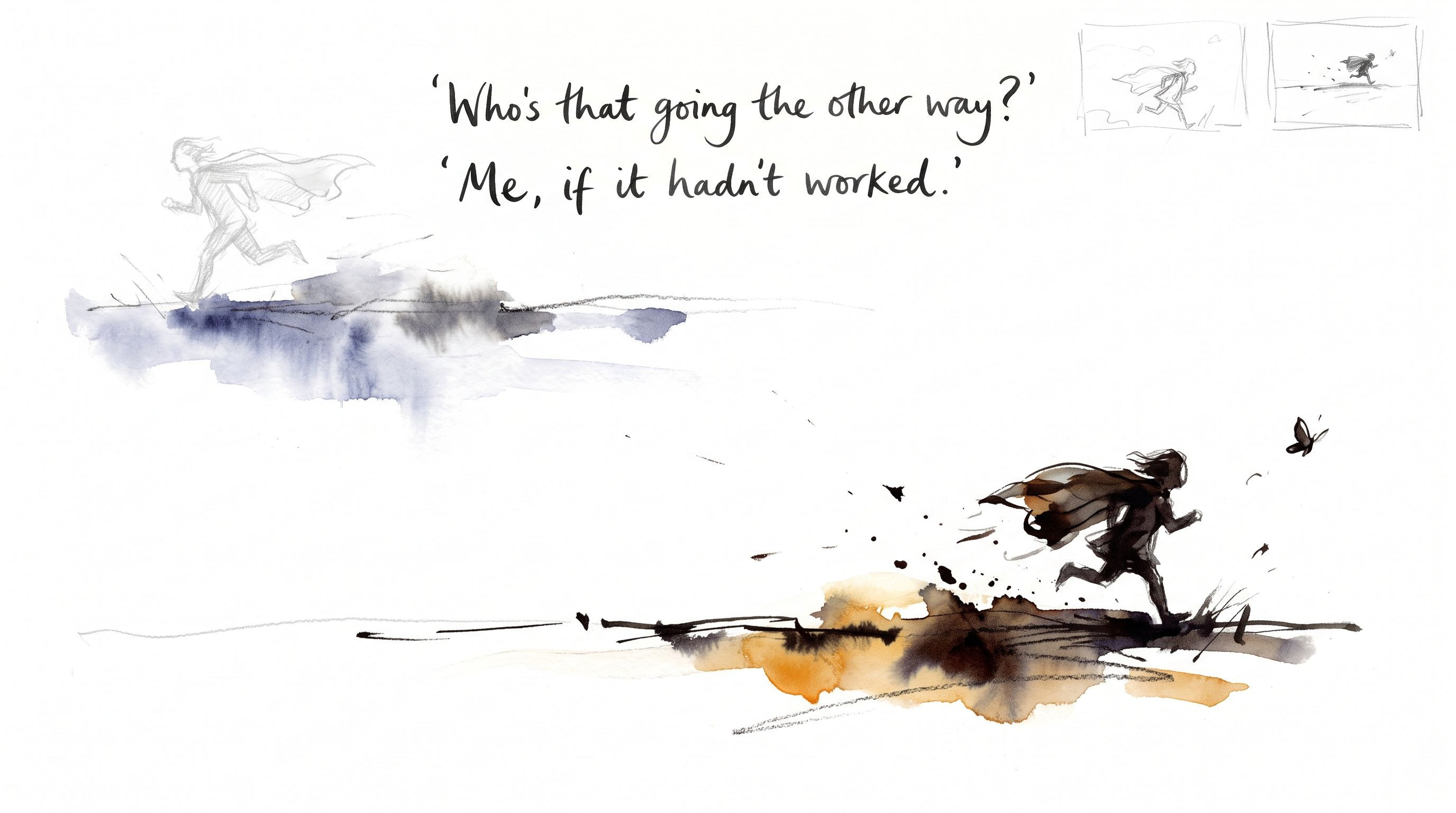
In the spring of 2000, Scott Pioli — the Patriots’ personnel director — put two photographs on his desk.
One was a sixth-round quarterback out of Michigan. Taken 199th, after six other quarterbacks and most of the league’s attention.
The other was Dave Stachelski, a tight end out of Boise State. Pioli had taken him earlier, because he liked him more.
He kept both where he had to look at them. Not as a trophy. As evidence that he could easily have gotten it wrong.
The quarterback was Tom Brady.
David Halberstam recorded both photographs in The Education of a Coach.
Years later, Seth Wickersham asked Brady the same question twice, a decade apart: how close had he come to never making it.
The first time, Brady was in his twenties. He answered easily. If a different team had taken him one pick earlier, he said, he’d probably be out of the league. He could still see that version. It was close enough to touch.
The second time, he was in his late thirties. He leaned back, stared at the ceiling, and got defensive. He’d done the work. The others hadn’t.
Nothing about the draft had changed.
The story had won.
That’s the part nobody names. Success doesn’t just reward you. It deletes every version of events where it didn’t happen, until the way it went looks like the only way it could have.
We have a word for this. Outcome bias.
And medicine did something strange about it: we built a room. A group convenes, on a schedule, to ask whether a decision was good — including when the patient walked out fine.
We’re not good in that room. Matthew Syed wrote a book about how much better aviation is at this, and he’s right.
But we built the room. Almost nobody else did.
You know why we bothered.
The patient you sent home who did fine — you don’t know whether you were right or lucky.
The first-pass intubation that went clean — you don’t know whether that was your hands or that airway.
The consult you didn’t call, on the guy who turned out to be nothing — that one’s still open too.
You were trained to keep the second picture on the desk. That training is rarer than you think.
TL;DR
Success erases the alternatives.
Keep the picture of the one that didn’t work.
What makes a clinician valuable on a software project is assumed to be clinical knowledge. It isn’t. Knowledge is the cheapest thing in the building now.
What’s expensive is someone professionally trained not to let the outcome grade the decision. Who looks at a dashboard of green and asks what the green is made of. Who has sat in that room and watched a good outcome get taken apart anyway.
You didn’t learn that in a course. You learned it with experience.
So put the other picture on your desk.
You have a unique combination of skills, experience and values. So do great things! … and tell me about them at kevin@clinicians.build.
— Kevin & AI
(please verify content for yourself, partially AI generated and may contain errors)