

Reframe time, money, and mojo for people who build things and also take call.
New here? Every Saturday I take the week’s best idea in each of three buckets and cut it down to something you can read between patients.
Might take you 5 min to read.
I read the week so you don’t have to.
Let’s go.
— Kevin
1. TIME
The pilot was never the expensive part.

This week, on a stage in Chicago, Lee Schwamm, MD — a stroke neurologist who is now senior vice president and chief digital health officer at Yale New Haven Health — described the rule his system runs on:
“We’re not evaluating launching a pilot unless the executive sponsor commits to paying for it if it’s successful.”
Read that twice.
It isn’t a funding rule. It’s a time rule.
A pilot costs a quarter. A deployment costs years — retraining, version bumps, the day the vendor changes an endpoint, the workaround nobody tells you about.
Nobody signs up for that in advance. So it lands by accident, on whoever is still standing.
Here’s the number that makes it real. Drew Smith, chief data and analytics officer at ChristianaCare, said at a panel this week that at a prior employer, only two of ten deployed AI tools were still in use a year later.
Two. Not two that failed. Two that survived.
And the discipline at the other end of that arc, from Kay Burke, who runs nursing informatics at UCSF Health — the question she asks of every click already in the chart: if we were designing this today, would we still require this?
Every one of those clicks was somebody’s good idea. That’s the whole problem.
Schwamm’s other line is the one I keep hearing: some of the most important interventions we can do in medicine don’t save money.
True. And they still need an owner in year two.
So before you build it, answer the boring question. Who is maintaining this in 2029, and what are they being paid to do instead?
A win.
(Words: 280. A minute, and a bit.)
“We’re not evaluating launching a pilot unless the executive sponsor commits to paying for it if it’s successful.” — Lee Schwamm, MD
Dig deeper: the ROI panel write-up. Read it for the maintenance burden nobody prices at procurement.
2. MONEY
A hundred claims became twelve million dollars.

This week the HHS Office of Inspector General posted an audit of Methodist Hospital.
Auditors pulled 100 claims worth $1,426,020. Seventy-three were fine. Twenty-seven weren’t. The actual overpayment they found: $256,926.
The refund they demanded: $12.4 million.
That’s extrapolation: you sample, find an error rate, apply it to the whole population. The same week, an audit of HumanaChoice sampled 220 enrollee-years, found 178 with unsupported diagnosis codes and $669,237 in real overpayment — and asked for $130.9 million.
Don’t read the multiplier as aggression. UnitedHealthcare of Wisconsin drew a larger sampled overpayment — $722,280 — and a smaller ask, $46.9 million. The ratio tracks how many lives sit behind the sample.
Now the part that should keep you up. Extrapolation is a bet on consistency. It works because a hospital that got 27 claims wrong in a random sample is a hospital with a habit. OIG said as much at Methodist: the root cause was that the hospital didn’t follow its own written billing policies.
Software doesn’t have a habit. Software has a defect. Perfectly reproduced, on every claim, at 3 a.m., without variance.
Which makes your book of business more extrapolable than it has ever been.
Mohanish Anand, therapeutic-area head for global trial management, asked six frontier models to pick a random number between 1 and 30.
All six said 17.
Confident. Plausible. Identical. That is what a fleet of agreeing models looks like from the outside, and exactly what an auditor’s sample catches.
So pull your own hundred. Grade them the way somebody hostile would. Multiply by your volume.
If the number frightens you, congratulations — you just found the product.
A win.
(Words: 280. A minute, and a bit.)
An audit doesn’t punish your worst day. It punishes your most repeatable one.
Dig deeper: the Methodist report. Skip to the sampling methodology appendix — that’s the part that scales.
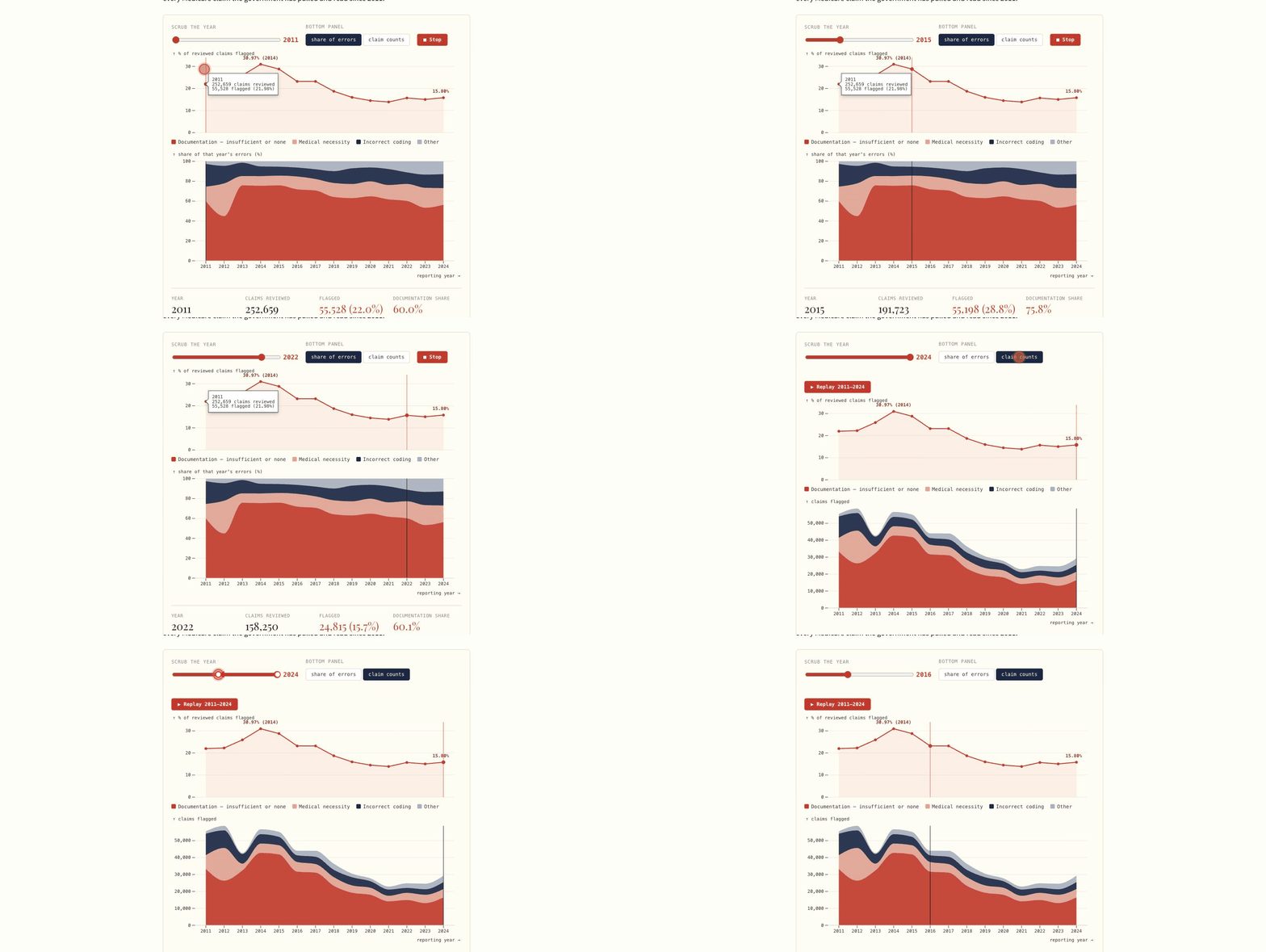
Also the interactive at clinicians.dev
3. MOJO
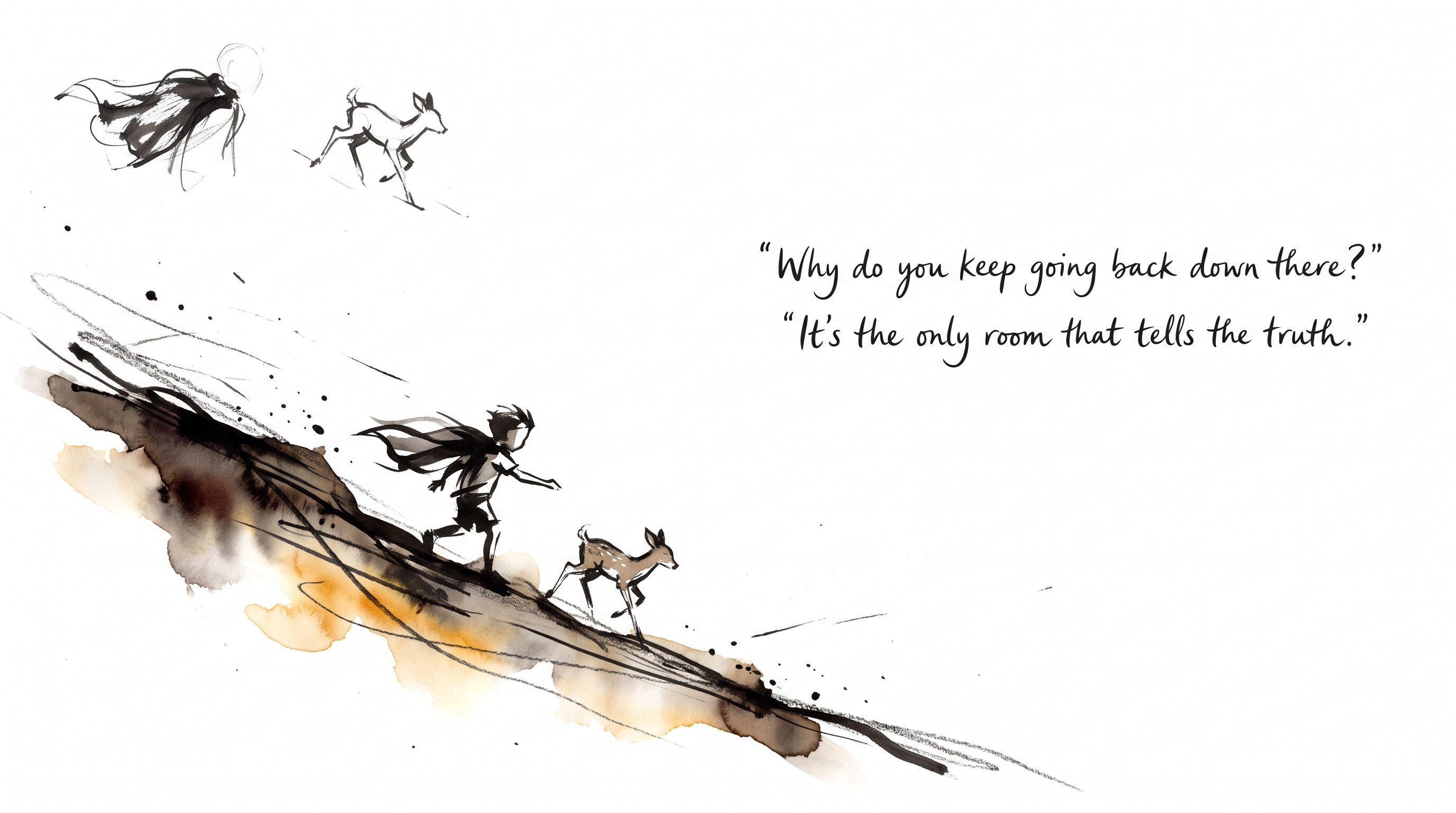
She kept the badge.
Before she took the job, Margaret Lozovatsky, MD told her CEO there was one thing she wanted.
She wanted to keep practicing.
She’s a pediatrician. She’s also, since May, the chief digital information officer of Premier Health in Dayton — the person who owns technology strategy for a five-hospital system, in from the AMA by way of Novant and Cedars-Sinai.
And she still does a couple of shifts a month, with newborns.
She isn’t alone — the physician-executive seat is having a year. But the interesting part isn’t the résumé. It’s the negotiation.
She asked for the shifts before she had the title. She was protecting something she already knew she’d need.
Here’s what I think it is.
Every other signal reaching a chief digital officer has passed through three people who want you pleased. The dashboard is curated. The governance committee is diplomatic. The vendor’s QBR is a work of art.
The 2 a.m. newborn is not diplomatic.
A shift is the last unmediated feedback channel an executive has. Not nostalgia, not optics — instrumentation. The one place the thing you shipped has to work with nobody managing your impression of it.
Most of us drift the other way. The further we get from the room where it’s used, the more we call that promotion.
So the question this weekend isn’t what you’re building.
It’s: when did you last use it yourself, on a shift, with a real person waiting on you?
A win.
(Words: 243. A minute.)
You cannot manage your way back into a room you stopped standing in.
Dig deeper: the Becker’s piece. Read her paragraph as a job negotiation, not a bio.
🔭 THE ADJACENT POSSIBLE
One thing from outside health that’s about to be reimagined inside it.
On Tuesday a company called TypeSafe came out of stealth with $40M and a model that refuses to chat.
[You can test it out on openrouter right now]
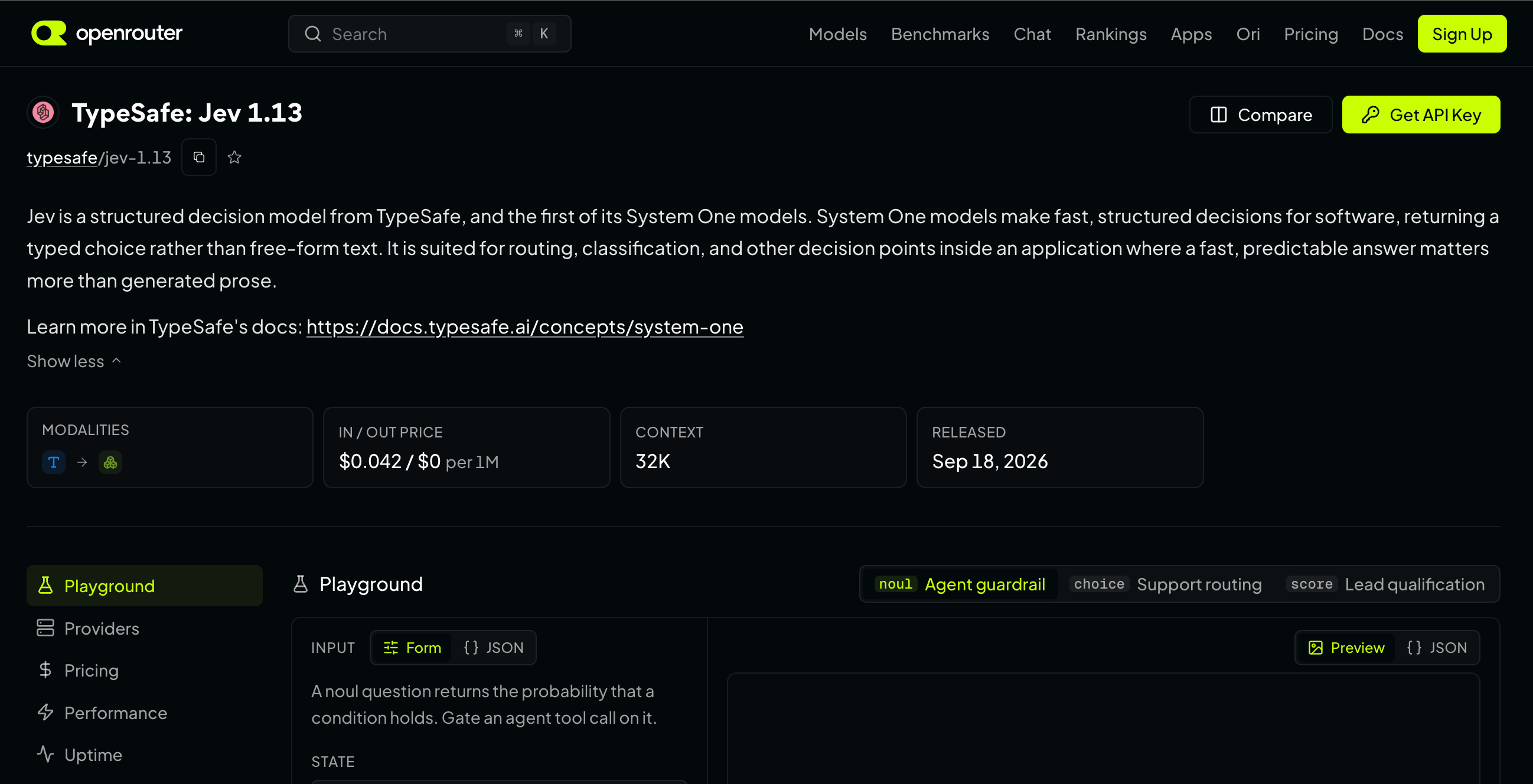
Jev does three things: picks from a list you supply, scores on a scale you define, or returns the probability that a yes/no statement is true. Typed output, calibrated confidence, 70 to 500 milliseconds end to end. Founder Diogo Almeida worked on the research behind ChatGPT. This is the opposite bet. Input runs $0.042 per million tokens. Output is free.
Outside health it’s a router. Inside health it’s every gate we’ve been too poor to build: does this note support the code we billed? Should a human see it first?
Go back to the money section. An audit multiplies a hundred claims because sampling was all anyone could afford.
When checking costs a thousandth of generating, you stop sampling your own work. You check all of it.
One caveat: a confidence score is not a review. “0.91” tells a regulator nothing. The gate still needs a reason attached.
But the arithmetic of verification moved this week, and that doesn’t happen often.
Dig deeper: the model’s pricing page — it’s the clearest statement of what the thing actually is. Note that the calibrated confidence, not the speed, is the part you’d build on.
You have a unique combination of skills, experience and values. So do great things! … and tell me about them at kevin@clinicians.build.
— Kevin & AI
(please verify content for yourself, almost completely AI generated and may contain errors)