

⚡ Around the Wards
Radiology Partners says its AI drafts found about 40% more than its radiologists: 237,905 exams, a blinded review, and a product still labeled investigational.
AMA delegates voted to put clinical AI liability on the vendor: the asks include a ban on contract clauses that shift blame to the physician or the hospital.
A federal prior auth test program opened with a bug count: 669 interoperability issues across 2,653 test executions, about seven weeks before payers’ APIs are due.
91% of health-system CIOs now oversee AI governance: in the same survey of 130, 22% of organizations say they don’t yet consistently measure whether AI worked.
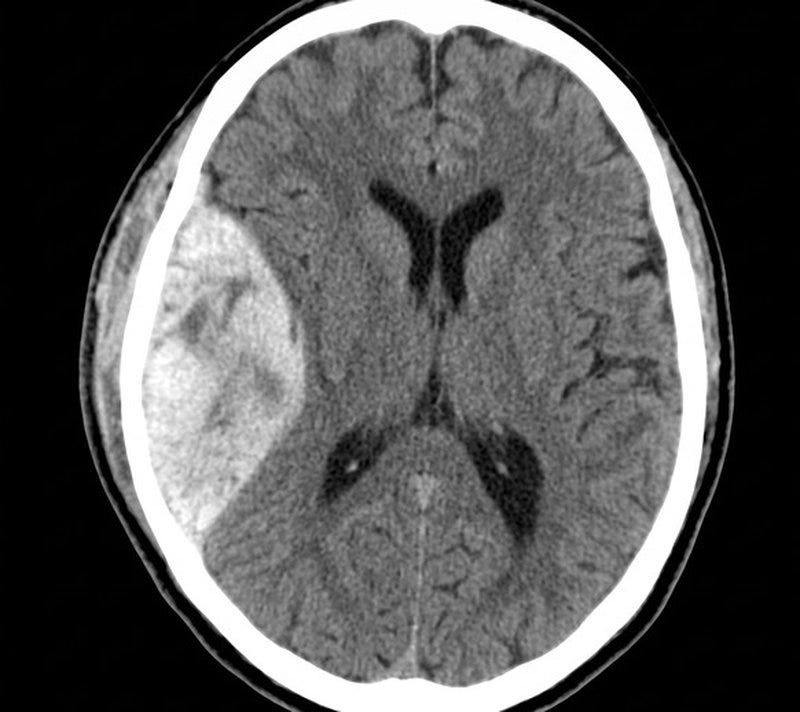
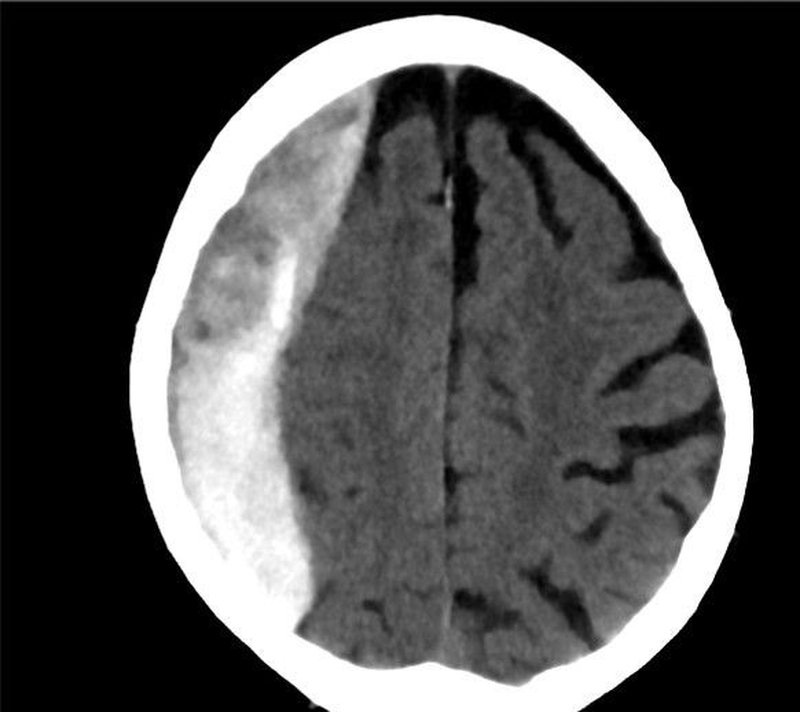
🩻 Real or AI?
A
B
Answer at the bottom.
🧭 The AI Curbside — AI answers your questions
This is what AI thinks — not medical advice, not my opinion or my employer’s. Verify before you act.
“Is there a safer way to ask a chatbot about the patient in front of me?”
Short answer: One launched this week. It’s a filter, not a permission slip.
What changed: MDCalc launched CrossCover on Wednesday. It flags identifying details and recommends redaction before your question reaches a partner AI model, and limits what that model learns about you. Dr. Graham Walker, the ER doc who co-founded MDCalc and is now its head of AI, is one of its founders. The launch coverage calls it a “rumble strip.”
AI’s take: Access is a sign-up list, and the answer-checking feature is labeled beta. No performance numbers are published.
[I wouldn’t use this with anything real, just Fable 5.2 fake stuff - which is pretty good]
🔬 The Big Thing
Radiology’s “ChatGPT moment” was announced by the company selling it. What did it measure?
Mosaic, the technology arm of Radiology Partners, released results on Wednesday from an internal study of its vision-language models, which draft the radiology report from the images.
The team went back to 237,905 exams its radiologists had already read without AI. Panels of board-certified radiologists reviewed a random subset where the draft, the original report, or both flagged a finding, blinded to which was which.
Across 50 conditions, the drafts turned up about 40% more confirmed findings on average.
On chest X-ray, 91.2% of AI drafts were error-free against 83.0% of the original reports. Radiologists who had read at least 50 AI-drafted exams were more than 27% more efficient on CT and 31% on X-ray, against their own pre-AI pace.
The draft found more. Nobody has shown the patients did better.
It’s a company study, labeled preliminary, with no journal attached. The release carries the line “Investigational device. Not for sale in the United States.” The “ChatGPT moment” line is CEO Rich Whitney’s.
📜 History rhymes: computer-aided detection for mammograms got higher Medicare payment in 2002, and by 2008 it was used on 74% of Medicare screening mammograms. A large 2015 study found it didn’t improve radiologists’ accuracy on any measure. More marks on the film weren’t more cancers caught.
😤 “It’s a press release.” It is. The blinded review is still more than most vendors show, and the company says both papers are on its RSNA event hub. Read those before the headline.
😤 “I’m not a radiologist. Why do I care?” The incidental nodule lands in your inbox, not theirs.
📡 Radar
The AMA wants the vendor’s name on the claim
AMA delegates adopted policy at the Interim Meeting saying that when a clinical AI product gets it wrong and the physician used it as intended, liability “should rest with the AI vendor, manufacturer, or distributor.”
October’s issue brief described the problem. This is House policy with a to-do list: device-style product liability, required insurance, disclosed failure rates across patient populations, and no contract clauses that push liability back onto the physician or the hospital.
😤 “A resolution isn’t a statute.” No. It’s the script your state society lobbies from.
Where the agents went live, the hiring stopped first
Black Book surveyed 182 healthcare operators, and 96 have an AI agent in production. Of those, 53.1% say it prevented or deferred planned hiring, 44.8% reassigned staff and 13.5% eliminated occupied positions. A quarter added oversight or quality staff.
Black Book says the findings describe its respondents and reports no margin of error.
The first sign isn’t a layoff. It’s an approved job that never gets posted.
😤 “Black Book surveys are soft.” Fair. The order of effects is still worth knowing: deferred hires first, cuts last.
🎙️ From the Pods
🎙️ Relentless Health Value — “Physicians as the Sleeping Giant”
Dr. Benjamin Schwartz, an orthopedic surgeon, tells host Stacey Richter why employed doctors rarely push back. Without somewhere else to work you have no leverage, and the real threat is a contract that quietly isn’t renewed. His first step: “You got to start kinda nudging the giant.”
🔇 Speaker Blindspot: Hasty generalization. The exits he lists, surgery-center ownership and direct contracts with employers, are built for proceduralists. A hospitalist can’t own the building.
🎙️ The Heart of Healthcare — “Why Is the World’s Most Valuable Company Betting on Healthcare?”
NVIDIA’s Kimberly Powell says radiology holds about three-quarters of the 1,600-plus FDA-authorized AI devices. She also says agents haven’t solved clinical diagnosis and that it will be hard.
🔇 Speaker Blindspot: Proxy measure. Clearances count what was authorized, not what’s switched on or whether it helped.
💡 BTW: Dr. Willie Underwood III, the AMA president quoted on the AI policy, was one of the first five urologists admitted to the Robert Wood Johnson Clinical Scholars Program.
🩻 Real or AI answer: B is real, A is AI.
The tell: Subtle. The clot is lens-shaped and convincing, but the brain next to it barely reacts: the lateral ventricles stay nearly symmetric with no real midline shift, and faint sulcus-like stripes run through the hematoma itself, as if gray-white texture were painted into the blood. A real EDH this big compresses the ventricle and shifts the midline.
Proof: A was made with Nano Banana 2.1 on 2026-11-12. B is a published, de-identified teaching image, not patient data: “Grosses epidurales Haematom nach Sturz 87W - CT - 001” by Hellerhoff, CC BY-SA 4.0, Wikimedia Commons, cropped to single axial panel, shared under the same license.

— Kevin & AI
(please verify content for yourself, partially AI generated and may contain errors)