

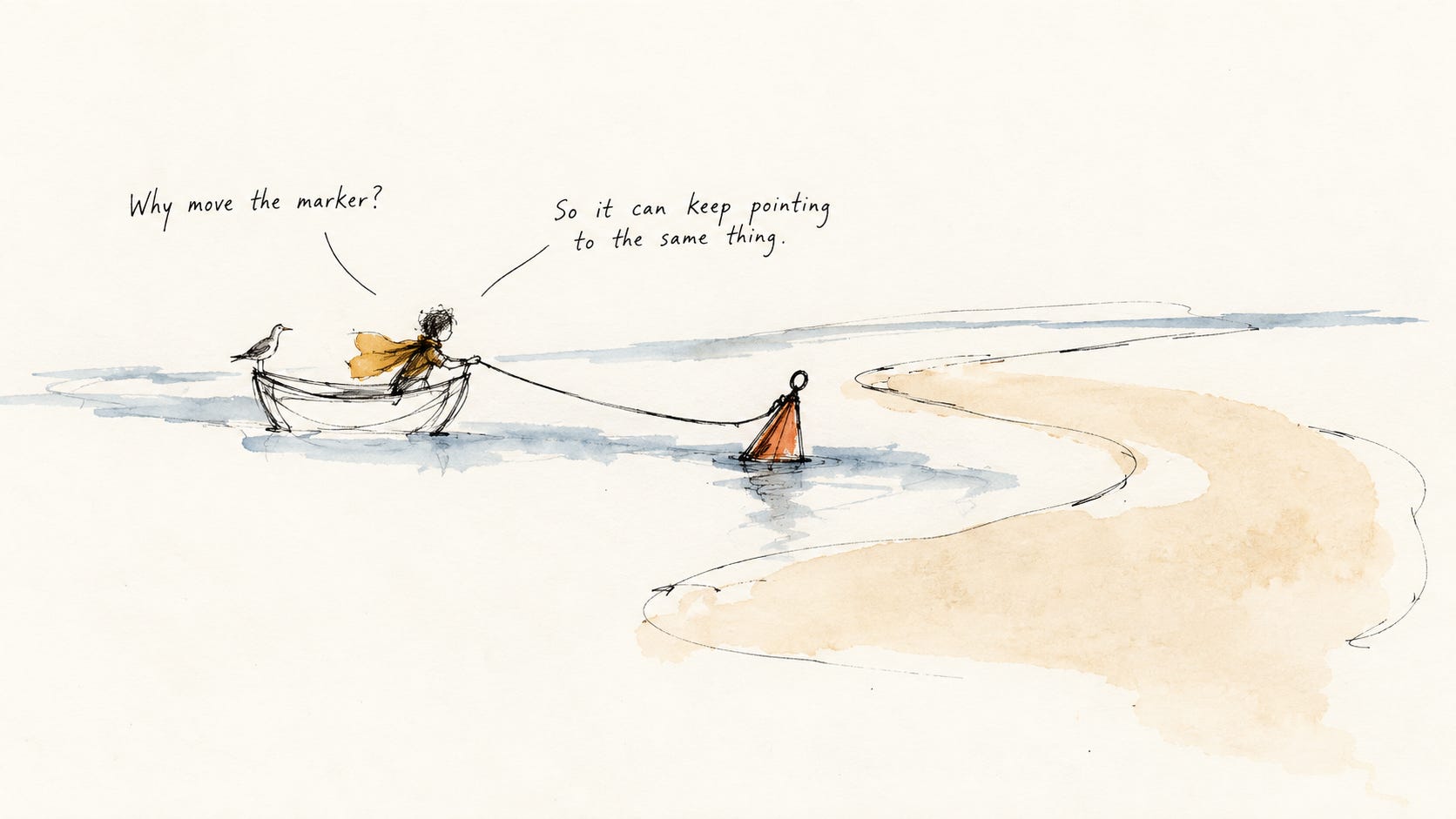
Memorial Sloan Kettering put OncoKB inside OpenEvidence — and put OpenEvidence inside its own Epic workflow. The curated annotation, not the model, is what changed hands.
Connecticut wrote human review into its state employee health plan — Anthem, Cigna and Aetna agreed. No AI-only denials or down-coding for 270,000+ members from January 1.
IDEXX bought CoVetAI — a diagnostics company bought an ambient scribe. Vet medicine reaches the answer about a year before we do.
25 health systems spent this week building clinical-judgment agents with Epic — NEC flags, refill protocol checks, med-history conflicts. Not scheduling anymore.
🎧 Podcast: NEJM AI Grand Rounds — “Beyond the Hype: Dr. Xiao Liu on Evaluating Medical AI” — under 5% of published AI-versus-clinician imaging studies met the methodological bar medicine uses everywhere else. The reporting guidelines ask you to disclose what you did, not to have done it perfectly.
🔮 My bet: within 18 months, at least three more academic centers license a curated clinical knowledge asset — a tumor board catalog, an antibiogram, a transplant eligibility ruleset — into someone else’s tool. The AI deal everyone signs in 2027 isn’t for compute. It’s for annotations.
🧭 The Curbside
“Can I point a cheap fast model at synthetic billing data instead of a frontier model?”
Short answer: Maybe — if you treat the confidence score as the product, not the answer.
What changed: TypeSafe released Jev on Tuesday — a model that doesn’t generate text at all. You hand it the allowed options; it returns one plus a calibrated confidence score ultrafast. Guideline adherence anyone?
Builder read / Watchout: It’s waitlist early access, not GA, and nobody is using PHI with it.
🔬 The Big Thing
What exactly did Memorial Sloan Kettering just sell?
On Wednesday, MSK and OpenEvidence announced a two-way integration: OpenEvidence goes into MSK’s Epic workflow, and OncoKB — MSK’s precision oncology knowledge base — goes into OpenEvidence for every clinician outside MSK.
OncoKB isn’t a model and it isn’t patient data. It’s a catalog of what each genomic alteration actually means — oncogenic effect, level of evidence, the therapies attached — curated by people and granted partial recognition status by the FDA under its public human genetic variant database program.
The model was never the moat. The curation was.
Every frontier model can read a tumor sequencing report. Almost none can tell you whether a Level 3B alteration is worth a trial referral this month. That answer is an annotation — made by a human, dated, revised when the evidence moves.
Now the uncomfortable half. A Nature Medicine pilot published last month put an LLM decision-support system into a tertiary ED. No adverse events; reviewers rated 99 of 100 sampled outputs clinically appropriate.
Clinician use fell from 68% to 30% over four weeks — hardest as shift workload rose.
Accuracy wasn’t the failure mode. Attention was.
So the question for MSK isn’t whether OncoKB-in-the-chart is correct. It’s whether an oncologist on their eleventh patient of the afternoon opens it.
😤 “This is a licensing deal with a press release attached.” Mostly, yes. But look at what’s being licensed. Not a dataset, not a model, not a patent — a maintained opinion, with a version and a date on it. I haven’t seen that priced before.
😤 “Curation doesn’t scale.” Correct. That’s the point.
😤 “Great, so I should go build a knowledge base.” You already have one. It’s the stuff you re-explain to residents every July that exists nowhere in writing.
❓ If the annotation is the asset, who owns it when it goes stale inside somebody else’s product? OncoKB has a curation cadence and a team. The reference tool has a cache.
🧐 Interactives
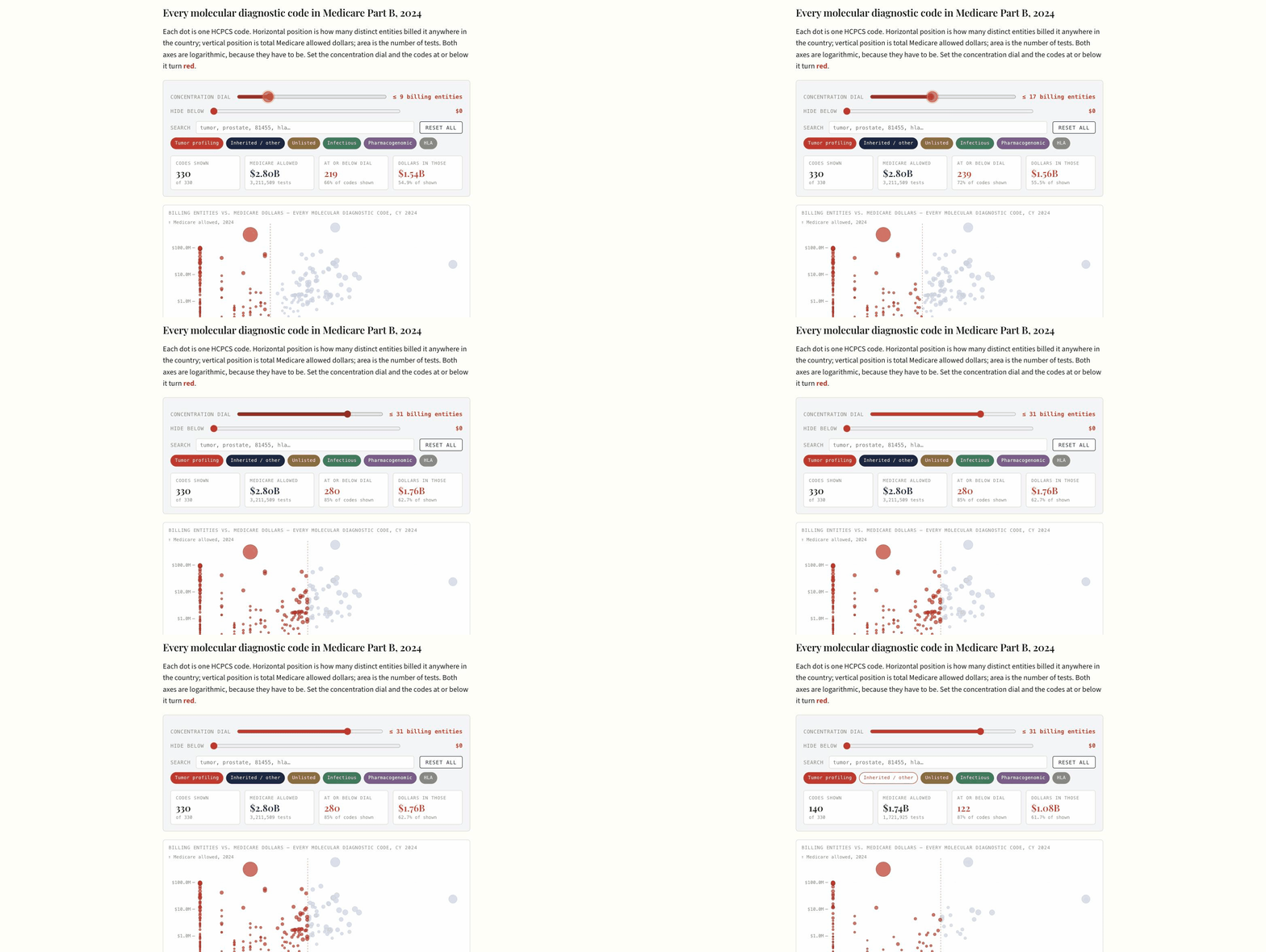
Memorial Sloan Kettering just licensed OncoKB — the annotations its curators have hand-maintained for a decade — into OpenEvidence, for every clinician outside MSK. The interpretation layer is now everywhere. Here is the layer it interprets: 330 molecular diagnostic codes in Medicare Part B, $2.80 billion, and 117 of them billed by exactly one entity in the entire country.
https://www.clinicians.dev/interactives/2026-09-17-one-lab-one-code-b
📡 Builder’s Radar
Connecticut turned “a human reviewed it” into a contract term.
The state employee plan’s carriers — Anthem, Cigna and Aetna — agreed to stop using AI as the sole basis for a denial or down-code, covering 270,000+ members from January 1. Officials will ask lawmakers in January to extend the same terms to every state-regulated plan.
A purchaser got there before a regulator did.
A diagnostics company just told you what an ambient scribe is worth.
IDEXX acquired CoVetAI on Wednesday — ambient listening and workflow software used by tens of thousands of veterinary professionals. Terms undisclosed.
The buyer wasn’t another AI company. It was the incumbent that already owns the lab, the instrument and the practice management system, buying the layer where a spoken sentence becomes an order.
Ambient documentation may not be a product. It may be an interface that attaches to whoever owns the workflow underneath it. The copilot categories have been collapsing into each other all year; this is what the bottom of that collapse looks like.
😤 “It’s dogs. This doesn’t transfer.” Veterinary medicine has no HIPAA, no prior auth and a two-year product cycle. It’s the fast-forward button, and it just landed on “the scribe is a feature.”
25 health systems spent this week building agents that make clinical judgments.
At Epic’s second Agent Factory Build-a-Thon, teams moved past the first wave’s transfer-and-scheduling agents. One reads notes for early signs of necrotizing enterocolitis in premature infants. Another checks refill requests against protocol and marks which are safe to approve. A third flags conflicts between a med history and new admission orders. Training is October; broad availability 2027.
The governance policy your system wrote in the spring almost certainly does not cover this class of agent.
❓ A NEC-flagging agent is a screening test with no published operating characteristics. What’s the sensitivity, and who computed it? I don’t know whether anyone in the room asked, and it seems like the only question that matters.
⚡ Quick hits
The fax outlived the FHIR rollout. MRO acquired Vyne Medical on Wednesday — paper, voice, fax and image intake for 800+ hospitals — pushing the combined footprint past 2,500. Interoperability is still mostly a document-processing business.
Sword Health is buying Headspace for up to $300M, all cash. 100M+ users, 20,000 employer accounts, sold at a ceiling of roughly a tenth of its peak private valuation. Distribution beat brand equity, and it wasn’t close.
🎙️ From the Pods
🎙️ NEJM AI Grand Rounds — “Beyond the Hype: Dr. Xiao Liu on Evaluating Medical AI”
CONSORT-AI and SPIRIT-AI are transparency requirements, not methodology mandates. You don’t need a perfect study to make a defensible claim — you need to say exactly what you did.
💡 Builder take: Write your eval’s limitations section first. If you can’t describe your test set honestly in five sentences, the eval isn’t done.
🔇 Speaker Blindspot: Is-ought conflation. Liu predicts clinicians will gain gatekeeping control of medical AI because of their proximity to the patient — a normative claim wearing a prediction’s clothes. In every other industry, gatekeeping power followed capital and platform control, not proximity to the work.
🎙️ Relentless Health Value — “How Stark Law, Stipends, and Noncompetes Drive Hospital Consolidation”
Eric Bricker, MD on site-neutral payment arbitrage: the same echocardiogram reimburses far higher inside a hospital than in an independent practice. If you sell into independent groups, you aren’t losing to a better product. You’re losing to a price difference your product can’t touch.
💡 Builder take: Before sizing an independent-practice market, check whether the procedure you’re built around is one the arbitrage is actively pulling into hospital ownership.
🔇 Speaker Blindspot: Circular causation. Bricker blames stagnant professional fees on balkanized physician lobbying versus a unified hospital lobby — but hospitals now employ most physicians, so both are downstream of the same arbitrage he just described. One cause presented as two.
🤝 Selling It
The utilization ledger — what actually decides your renewal
Boston Medical Center pays $200 to $600 per provider for an ambient AI license, and their chief data officer says that price tag doesn’t buy a permanent seat — falling utilization means retraining, or redeploying the licenses somewhere they’ll get used. Mayo Clinic’s Edwina Bhaskaran, on the same panel, asked the version with teeth: what do we decommission, and what have we failed at? Your first sale was an outcome pitch. Your renewal is a spreadsheet.
So build the spreadsheet yourself, from quarter one. Four columns: licenses provisioned versus actively used; utilization by cohort, never one blended number; the one outcome metric your buyer is personally measured on, with their baseline; and what you’re changing next quarter because of the first three.
Then say the part nobody says: “What would make you cancel. Tell me now and I’ll build the early-warning signal into this page.”
💡 Try this: Ask your pilot champion which of their numbers appears on their own performance review. If they can’t answer in one sentence, you don’t have a renewal — you have a trial.
💡 BTW: Daniel Nadler, OpenEvidence’s founder, published a collection of imagined ancient love poems — Lacunae: 100 Imagined Ancient Love Poems — with Farrar, Straus and Giroux in 2016, and is the youngest person ever elected to the board of the Academy of American Poets.
📅 Upcoming: MassAITC’s free “Understanding and Assisting Older Adults with AI” webinar, Tuesday September 22, 4pm ET.
You have a unique combination of skills, experience and values. So do great things! … and tell me about them at kevin@clinicians.build.
— Kevin & AI
(please verify content for yourself, partially AI generated and may contain errors)