

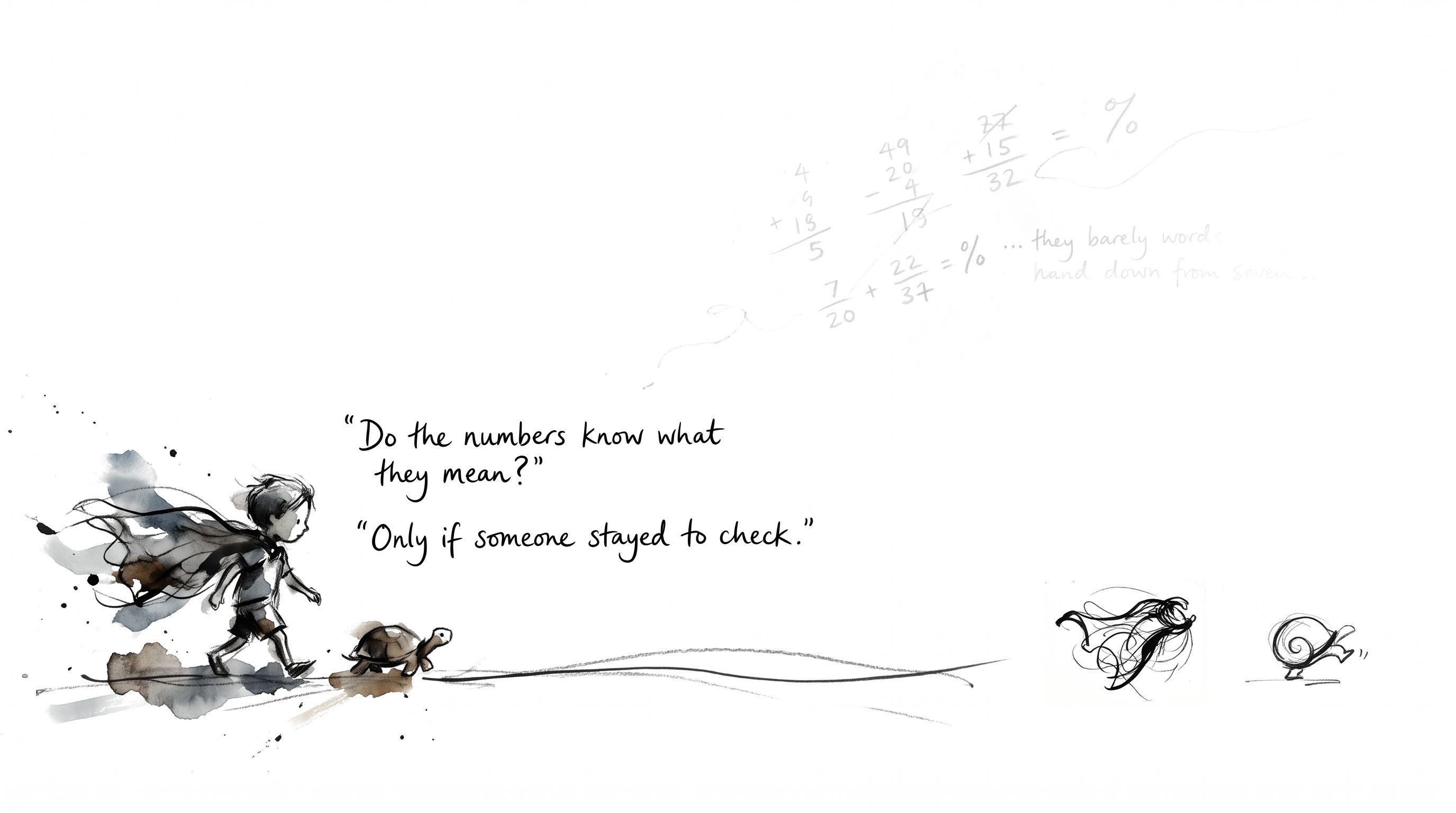
Medicare is working out what an “AI physician” is worth — the internal number under discussion is 60% to 80% of the human rate for the same service. Full treatment below.
CMS opened its ACCESS model to heart failure, COPD, substance use disorder and tobacco cessation — 160 participating organizations, payment tied to measured outcomes, new tracks spring 2027. Three of four people on Medicare already qualify for a track.
🔮 My bet: within 18 months somebody builds the referral layer between the tracks, not another track. Heart failure plus COPD plus nicotine dependence is three vendor relationships today, and nobody owns the seam.
The WISeR prior-authorization pilot went live on a rushed timeline and delayed care — per newly released documents, covering skin substitutes and epidural injections. Same agency, same month, opposite direction of travel.
HCA crossed 72 hospitals on Meditech Expanse — two of 15 US divisions fully converted. If your integration roadmap assumes two EHRs, add a third.
🎧 Podcast: This Week Health’s Solution Showcase — “22 Agents in 12 Months,” with UTMB — Bunkerhill CEO Nish Khandwala’s pricing model: a fixed pool of AI credits the hospital buys at the start of each quarter and allocates across use cases itself, so a pilot that stops working can be defunded.
🧭 The Curbside
“Can I run any genuinely useful agents on my own laptop yet?”
Short answer: For defined tasks, yes — and localhost is the one sandbox that needs no BAA.
Evidence: A tuning walkthrough published Sept. 15: Gemma 4 12B fits in ~6.7GB of VRAM, and Ollama’s default 4,000-token context is nowhere near the ~64,000 agentic work wants. Simon P. Couch, a senior engineer at Posit: “A few months ago, any LLM that I could run on my Macbook scored 0% on an agentic coding eval I put together. [The April] Qwen 3.5 and Gemma 4 releases both scored 90%.”
Watchout: Local still lags badly on long multi-step chains. But the gap has closed enough that there’s no excuse for prototyping.
[BTW check out Bionic from LM Studio if you are in to running local agents (not just models) …. https://lmstudio.ai/ … gemma 4 and qwen 3.8 27B work ok, but kinda slow obv]
🔬 The Big Thing
What is a doctor’s judgment worth? Medicare’s opening bid is 60 cents on the dollar.
Federal health officials are weighing a new Medicare payment category that could reimburse companies for AI software that supports diagnosis or care. Nothing has been proposed. It’s a conversation.
Inside the administration, per a person involved in the discussions, the live question is whether AI physicians run by technology companies should be paid 60% to 80% of what a human earns for the same service.
A benefit category isn’t a press release. It’s a gravity well. Staffing, liability, build-vs-buy, what a residency is worth — all of it bends toward the rate once the rate exists.
The evidence underneath is what makes the timing strange. FDA has cleared more than 1,500 devices containing AI, and essentially all of them do one discrete thing — find the clot, flag the nodule. There’s no framework built for a chatbot that prescribes.
And Sam Ashoo, MD went through the numbers this week. In a published cohort of 1,357 of those cleared AI/ML devices, 2.5% had a prospective trial, and 0.2% — three of them — were studied against mortality, morbidity or readmission. Clear on substantial equivalence, deploy at scale, then set a price. Validation is the step nobody’s standing on.
Which is where a clinician who builds becomes the scarce input. Nobody at CMS is going to define what an AI internist may do when a patient on apixaban turns up with a hemoglobin of 6.4 and insists she feels fine. Someone who’s been in that room writes it down, then builds the test that proves the model stays inside it.
😤 “60% is a discount. It should be 5% — software has no marginal cost.” That’s the CFO’s argument and I think it eventually wins. But the first number anchors the next decade.
😤 “This is vaporware. No rule has been proposed.” Correct — a discussion, not an NPRM. I’m telling you anyway, because payment categories are where American healthcare’s real decisions get made, and by the time there’s a comment period the shape is set. Say “an AI can’t be a physician” to a CFO looking at a 1.4% operating margin and watch what happens.
❓ If Medicare pays an AI 70% of a physician rate, who signs the note? I keep circling the attestation layer — some artifact recording what the agent did, what a human reviewed, and what neither of them caught. I think there’s a product in there. I can’t see its shape yet.
🧪 Try the interactives — both built from the real CMS public-use files:
A — Two Targets, One Policy — WISeR sends one AI prior-authorization tool at skin substitutes and epidural injections; one chart of 13,943 Medicare billers shows they are not the same problem.
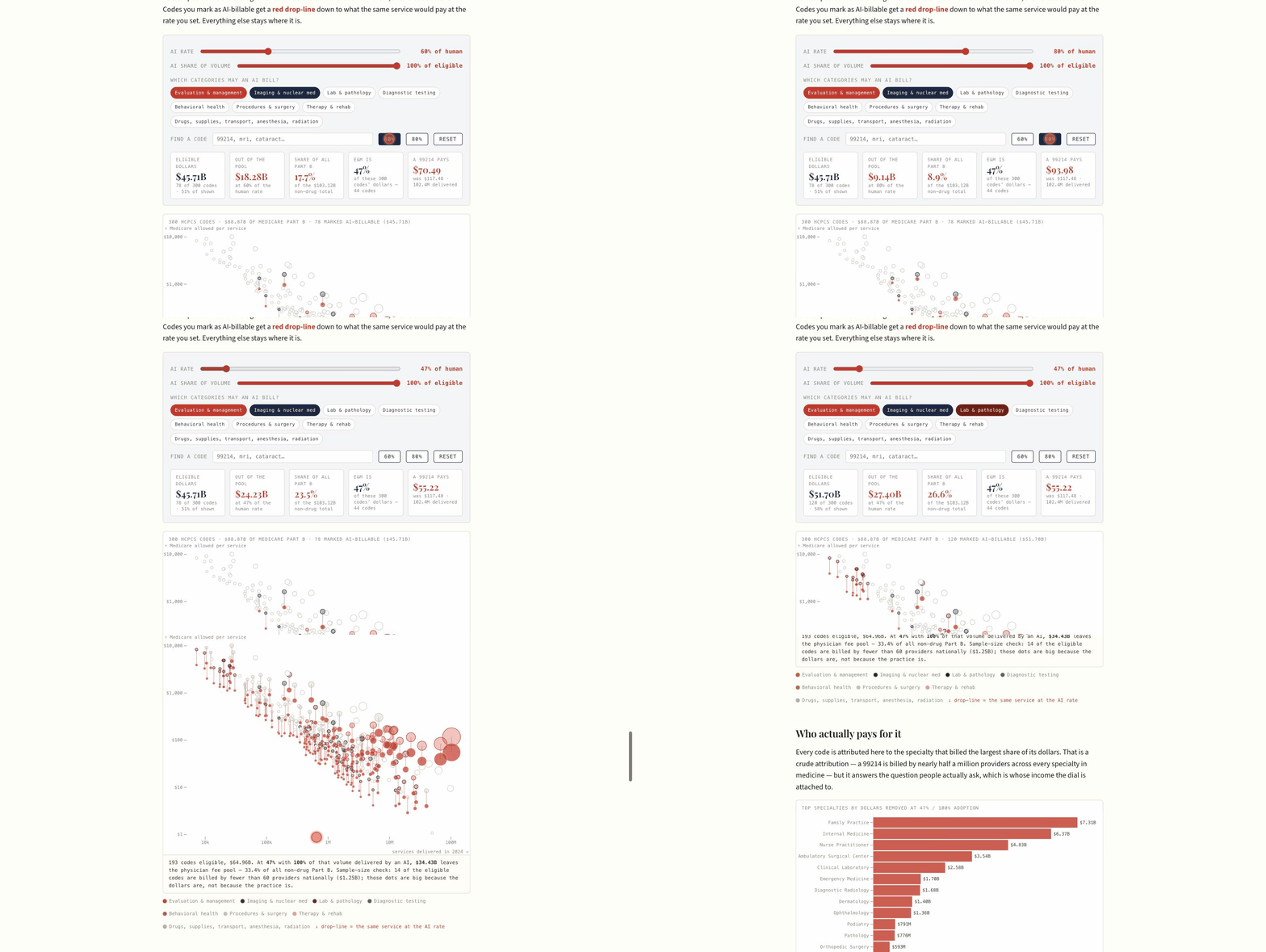
B — Sixty Cents on the Dollar — 60% to 80% of what, exactly? The 300 largest Medicare Part B service codes, $88.9 billion, with a rate dial and an eligibility switch. Drag it and watch which specialty pays.
📡 Builder’s Radar
The founder handed back the keys, and the company got two CEOs.
Terry Myerson passed the torch at Truveta after six and a half years; co-founders Jay Nanduri and Ryan Ahern take over as co-CEOs of the health-system-owned data collective.
🔮 My bet: provider-owned data collectives become the most contested asset class in health tech within two years. If Medicare pays for AI care, somebody has to hold the evidence that it works — and the systems that own the data are the only ones who can price it.
Quick hits
Evvy raised a $40M Series B to turn 100,000 patients’ worth of at-home microbiome testing into a research engine. Priyanka Jain sold a swab; what she built was a dataset in a domain that had almost none.
💡 80/20: find the question your specialty has no dataset for — the one where everyone reaches for expert opinion because the evidence isn’t there. That gap is the asset.
Karl Swanson, DO is leaving ambient scribing — his title at Doctronic is Clinical Context Engineer, which may be the most honest job title in health tech (via LinkedIn).
Aaron Neiderhiser of Tuva Health shipped a refreshed open-source guide to claims data; the Tuva Project is still the fastest path from raw claims to something queryable (via LinkedIn).
🎙️ From the Pods
🎙️ This Week Health, Solution Showcase — “22 Agents in 12 Months” with UTMB
Peter McCaffrey, MD, UTMB’s chief digital and AI officer, says the entry point wasn’t an agent — it was an FDA-cleared module flagging incidental coronary artery calcification. The flag created a brand-new problem: who reviews it, who acts, do you hire a navigator. The agents were hired to do work the AI invented.
💡 Builder take: every detection tool you ship generates downstream labor. Budget for it in the pitch, or the pilot dies on a people cost nobody scoped.
🔇 Speaker Blindspot: False dichotomy. Build-it-yourself versus buy-the-platform, with the middle option — an internal platform team — never priced. Worth remembering the vendor is paying for the episode. “22 agents” is a vanity numerator too: no retirements, no error rates, no outcomes.
🎙️ Lifers with Christina Farr — “Miriam Paramore on becoming a caregiver”
Paramore has 42 years in health tech and spent this episode as a daughter. Her father sat $500 over the Medicaid line, which cost him the dual coverage that would have paid transport for a 45-minute one-way dialysis run the family could not always cover.
🔇 Speaker Blindspot: Straw man. She rebuts AI by noting it can’t lift a dialysis bag or drive to the clinic — a claim nobody makes. The real ones, including the missing care-quarterback role she describes so vividly herself, go untested.
💡 BTW: Sean Kelly, MD — the emergency physician whose name is on this week’s research about agents acting on clinicians’ behalf — still practices, teaches part-time at Harvard Medical School, and does first aid at Fenway Park.
💺 Builder Seats
[These are just ones I found on LinkedIn that look interesting, no sponsorship or anything. Use at your own risk but look legit.]
Associate Partner, Clinical Technology Innovation — Chartis · Remote
Advisory side — you’d see twenty health systems’ AI roadmaps instead of one.
🔗 Apply on LinkedIn
Staff Clinical Product Specialist (MD) — SmarterDx · Remote
Physician product seat where the whole surface is documentation accuracy.
🔗 Apply on LinkedIn
You have a unique combination of skills, experience and values. So do great things! … and tell me about them at kevin@clinicians.build.
— Kevin & AI
(please verify content for yourself, partially AI generated and may contain errors)