

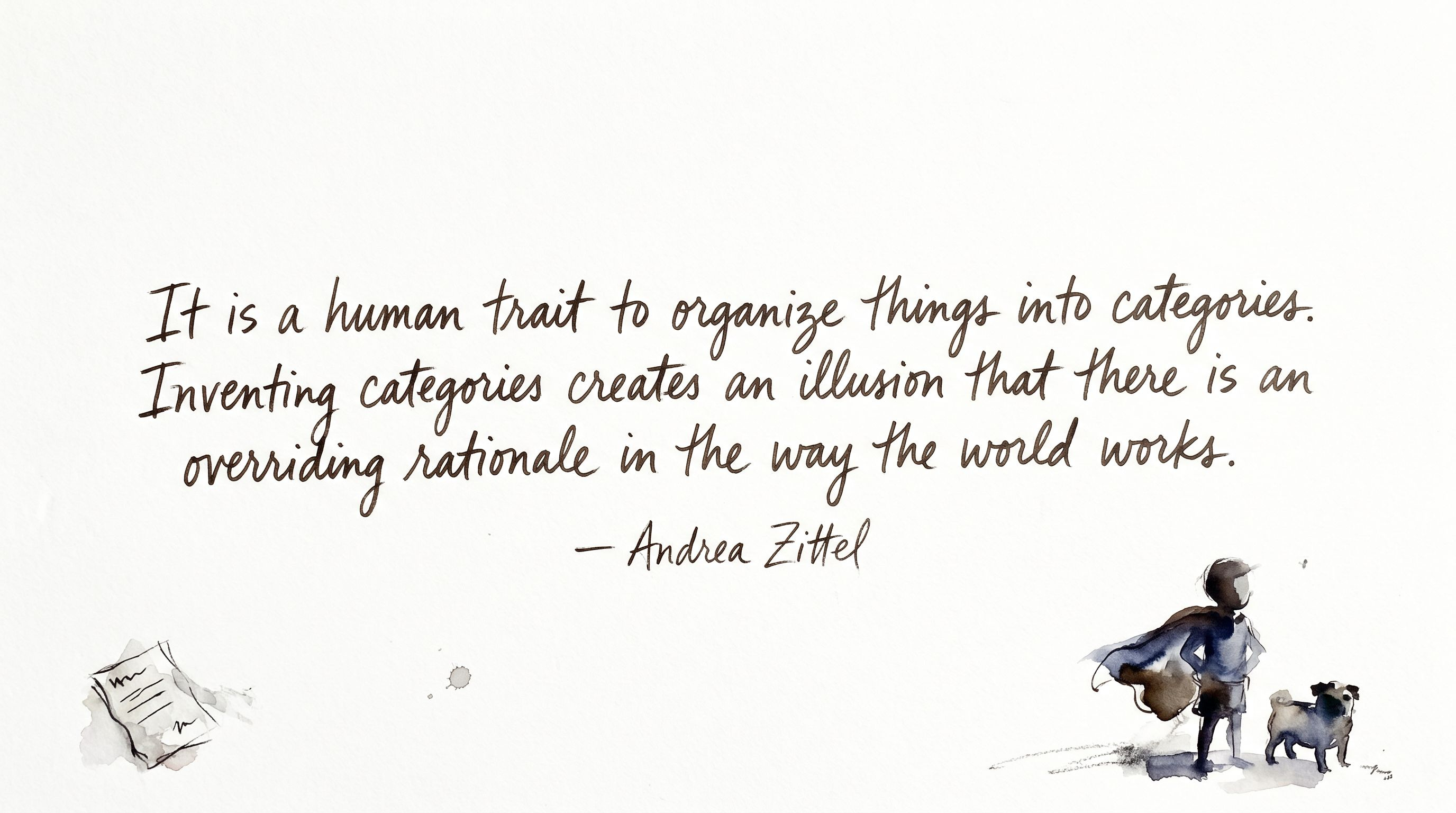
AI Is Splitting Healthcare Jobs in Two — and the Builder Opportunity Lives in the Seam
Nikhil Krishnan’s latest Out-of-Pocket piece argues that AI is restructuring healthcare work faster than almost any other industry.
The thesis is clean: every healthcare role is bifurcating into cognition roles (strategy, clinical judgment, complex decision-making) and task roles (data entry, scheduling, prior authorization processing).
The split isn’t theoretical. It’s already happening.
A startup called Basata AI is building AI agents specifically for specialty medical practices — targeting the task half of the role. Meanwhile, Blake Madden’s Hospitalogy “6 Big Bets” piece this week names “AI Bot Wars” as his first macro bet: payers deploying AI bots for claims adjudication and denial automation, providers deploying AI bots for coding optimization and prior auth appeals. Coding denials up 100%+ as the machines face off.
Here’s what neither piece names: the cognition-side tooling gap.
Everyone is building for the task half. Ambient scribes, coding assistants, prior auth bots — all task-reduction. But almost nobody is building tools that make the cognition half — the clinical judgment, the diagnostic reasoning, the “this patient is sicker than the vitals suggest” instinct — more precise, more supported, more defensible. That’s the seam. That’s where the clinician who builds has an unfair advantage, because you can’t build cognition-support tools without having done the cognition.
😤 “This is just the automation argument repackaged.” It’s not. Automation replaces a whole role. Bifurcation splits one role into two. The nurse who currently does both patient assessment AND charting doesn’t lose a job — the job becomes two jobs. One of them gets automated. The other gets harder.
😤 “Healthcare jobs are safe from AI.” Tell that to the 22% of revenue leaders who now name patient balances as their top priority because AI-CDI tools are capturing services that weren’t previously billed. The jobs aren’t disappearing. They’re shape-shifting.
😤 “Basata is just another workflow automation startup.” Maybe. But they’re the first I’ve seen explicitly targeting specialty-practice task roles as a category. The framing matters more than the company.
❓ What’s the cognition-support tool that a hospitalist would pay for out of pocket? Not a scribe. Not a coding assistant. Something that makes the judgment call better.
📡 Builder’s Radar
The Wearables Interoperability Stack Is Still a Mess — and That’s a Builder Opportunity
Brendan Keeler mapped the wrist-to-API aggregator landscape this week. Fitbit, Oura, Garmin — each has a proprietary API with its own data model, its own auth flow, its own quirks.
The aggregation layer (b.well, HealthEx, Flexpa, Fasten Health) exists but is fragmented. Getting a patient’s heart rate data from their Oura ring into a FHIR Observation resource in the EHR is still a multi-hop, multi-vendor pipeline.
If you’re building anything that touches wearable data, the interoperability stack is your first engineering decision — and there’s no obvious right answer yet.
😤 “Apple Health solves this.” For Apple Watch users, partially. For the 40% of the market on Android/Garmin/Oura, not at all. And Apple’s HealthKit-to-FHIR pipeline still requires an intermediary.
Patient Billing Is Now the #1 Revenue Priority for Health Systems — and 72% Don’t Track Defaults
A Fierce Healthcare survey of 205 healthcare revenue leaders found that 22% now name patient balances as their top revenue priority — roughly double last year. But 72% don’t track their own patient default rates. And 44% are outsourcing to third-party financing vendors.
The structural problem: employee OOP costs just crossed $6,000/year on the average family-of-four PPO, while median household emergency savings sit at roughly $1,200.
That 5x gap between what families owe and what they have is the product surface. And 72% of health systems don’t even measure how much of that gap they’re absorbing.
😤 “Patient financial experience is a solved category.” With 72% not tracking defaults? The category isn’t solved — it’s barely instrumented.
Salesforce Goes Headless — and the Pattern Matters for Healthcare
Salesforce Headless 360 exposes the entire platform as APIs, MCP tools, and CLI commands for AI agents. No browser required. Seat-based licensing shifts to consumption-based billing.
This is the same trajectory as Epic Agent Factory, Veeva’s AI pivot, and Workday’s consumption model. Enterprise software is being rebuilt as infrastructure for agents, billed per transaction rather than per seat.
For healthcare builders: if your product has a per-seat license and your competitor is billing per-agent-action, you’re on the wrong side of this transition.
💡 80/20: Audit your pricing model. If agents do the work, seats don’t make sense. The consumption-based billing pattern is coming to healthcare IT faster than most vendor roadmaps suggest.
340B “End the Spread” Proposal Surfaces
The Paragon Institute is proposing to restrict the 340B contract-pharmacy spread mechanic — the engine that grew the program from ~$9B in 2014 to ~$66B in CY2025. If you build 340B program management, specialty pharmacy, or infusion center tools, model three scenarios: status quo, modest contract-pharmacy restrictions, and full spread reform. The CFO who sees your sensitivity analysis trusts you more than the vendor who doesn’t mention it.
🎙️ From the Pods
🎙️ Tradeoffs — “Republicans Want to Change How You Buy Health Care”
Dan Gorenstein and Leslie Walker break down the HSA expansion push and why consumer-directed healthcare keeps bumping into the same evidence problem: people with high deductibles cut spending 5-20%, but the savings come from skipping care altogether, not shopping smarter. Sick patients skip the most.
💡 Builder take: If HSAs expand (and Congress just made more ACA plans HSA-eligible), the tools that help patients spend HSA dollars wisely — not just save them — become the product category. Think: AI-powered HSA spending advisor that flags which care is worth the OOP cost.
🧰 Builder’s Tip
The Split Is Your Edge — But Only If You Pick a Side
Here’s a mindset shift for clinician-builders: stop trying to build for “healthcare.” Build for one half of the bifurcation.
The task half needs automation, integration, workflow compression. That’s where the money is right now and where the competition is fiercest.
The cognition half needs decision support, reasoning scaffolds, context surfacing. That’s where the competition is thinnest and where your clinical experience is the irreplaceable input.
Most clinician-builders instinctively try to build for both halves at once — a tool that automates the charting AND improves the diagnosis. That’s two products. Pick one. Ship it. Then decide if you want to build the other.
Map your daily workflow and draw a line between what requires your judgment and what doesn’t. Everything below the line is a product someone should build. Everything above the line is a product only someone like you can build.
What are you building this week? Reply and tell me — I read every one.
— Kevin