

Google Cloud launched Gemini for healthcare in preview: an agent layer over the EHR, claims and payer-policy systems, with HCA, Highmark and Northwell as launch partners.
Oura is buying Counsel Health for $625 million: the ring maker gets a chatbot that hands patients to its own physicians.
Ohio State is moving its EHR to Azure as a backup: part of a five-year Microsoft deal that also moves most of its storage and compute.
Charta Health raised $55 million to review charts before the claim goes out: one engine, a provider product and a payer product. 😤 “So the payer and I run the same AI.” The payer version was built with one of the largest U.S. health plans.
Oscar members can pull their medical records in on day one of coverage: HealthEx does it through TEFCA individual access, with the member’s consent.
🎧 Podcast: The 229 Podcast — Roxi Foreman on governance and revenue cycle: when Marshfield Clinic joined Sanford Health, the combined team cleared long-idle revenue cycle work queues with extra hands instead of waiting on the technology.
🩻 Real or AI?
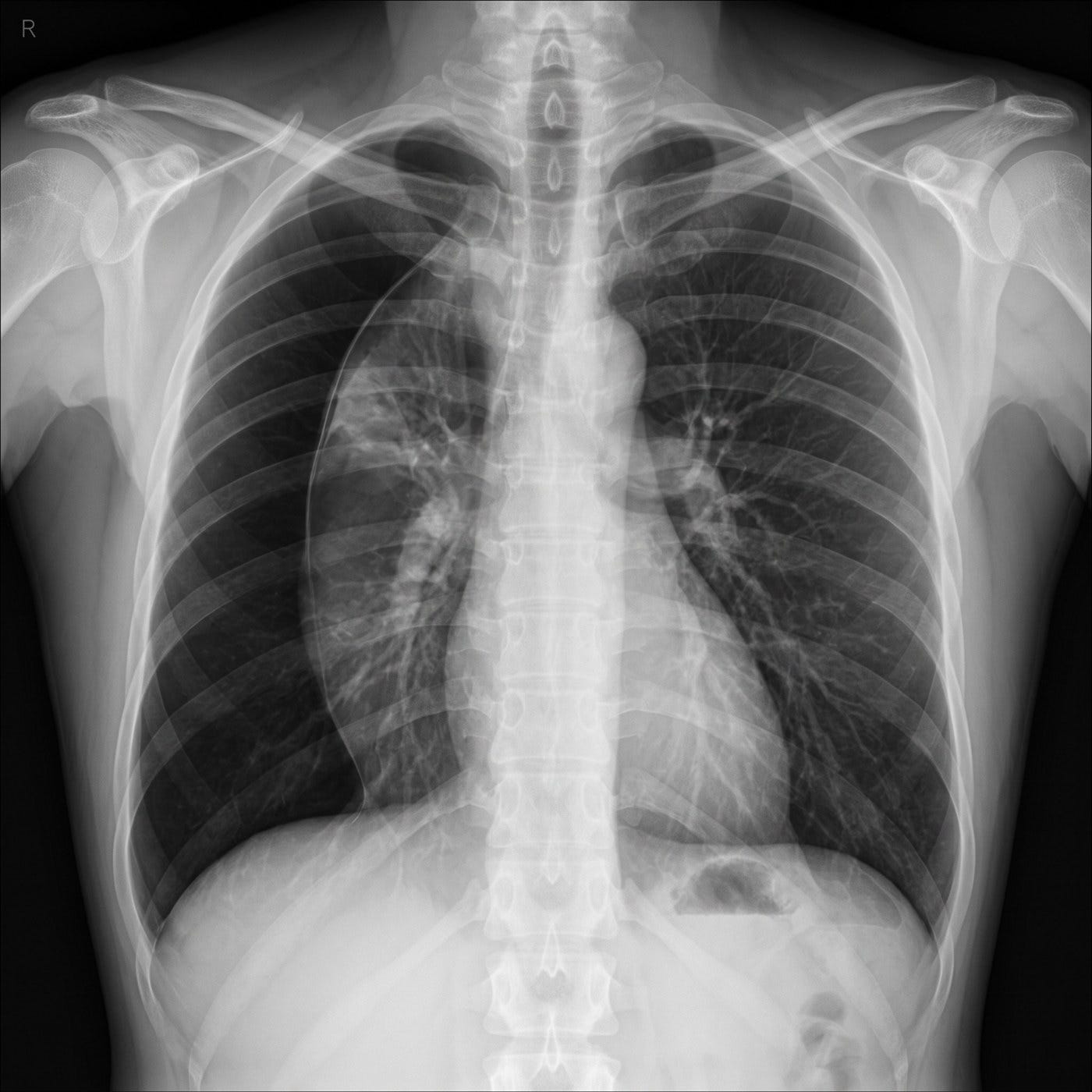
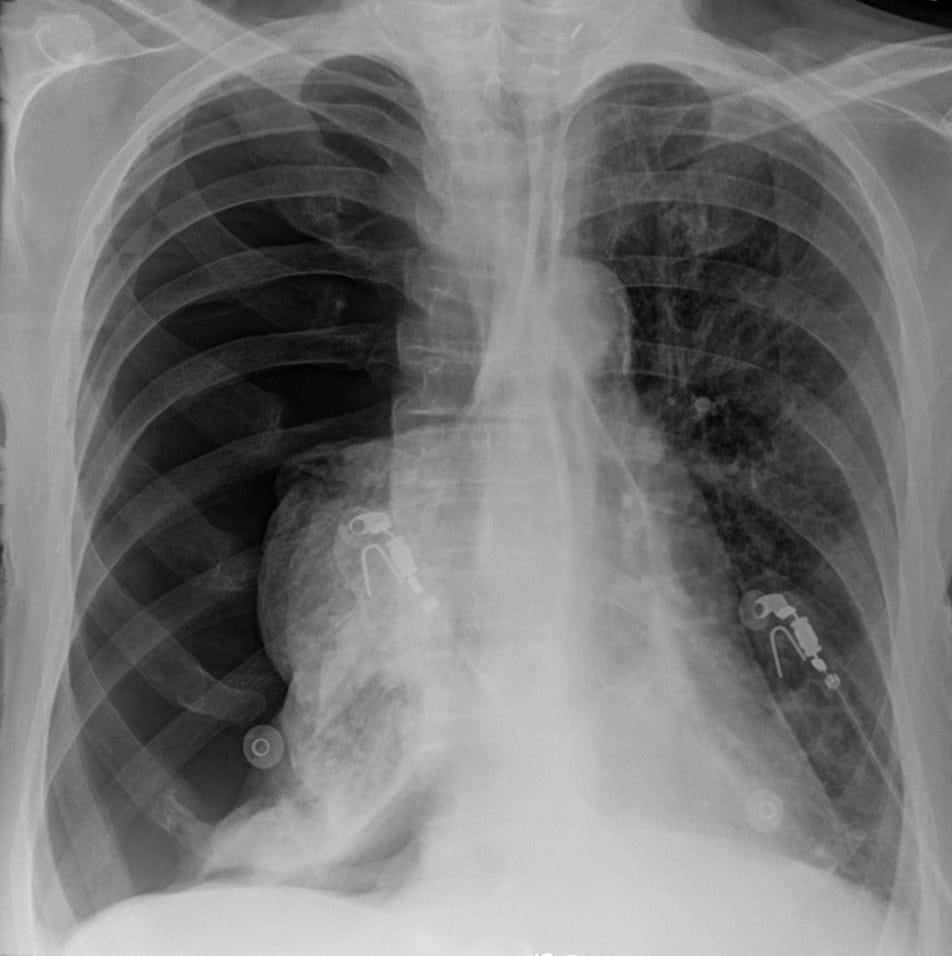
Two chest X-rays, both showing a right pneumothorax. One is real. The other was generated by AI. Which is which?
A
B
Answer at the bottom.
🧭 The Curbside
“Can I look up what an insurer actually pays for a visit code?”
Short answer: Yes. Insurers have had to post their negotiated rates as public files since 2022.
What changed: mimilabs published a practical guide to how those files fit together: an index table, a negotiated-rate table, and a provider-reference table that ties rates to NPIs and tax IDs. It now tracks 47 provider-reference sources, 26 of them added since September.
Watchout: a listed rate isn’t proof anyone was paid it. The guide’s joins and grain checks exist because these files are easy to misread.
😤 “My contract is confidential.” The rate file isn’t. The plan publishes it.
“A patient says Medicare will now pay doctors to treat vaccine injuries. Is that real?”
Short answer: There’s a new billing code. It isn’t a compensation program.
What changed: the 2027 physician fee schedule, published in the Federal Register on Monday, finalizes G0576. It’s an add-on billed with an office visit for diagnosing and treating vaccine adverse effects. It starts Jan. 1 and is on the telehealth list.
Your read: it pays for clinician time on top of the visit. It doesn’t decide causation.
🔬 The Big Thing
Google’s agent can read the chart and can’t write in it.
Google Cloud launched Gemini for healthcare on Tuesday, in preview, with HCA Healthcare, Highmark Health and Northwell Health as launch partners.
It’s an agent layer that sits on top of systems a hospital or plan already runs. The Epic and Oracle Health connectors are read-only. Active conditions, medications and recent labs come out. Nothing goes back into the record.
The starter skills are chart synthesis, pre-visit chart prep, medical necessity review, and drafting prior auths and appeals. The payer version matches prior auth and claims packets against the plan’s own medical policy.
One product drafts the appeal on your side and checks the packet on the payer’s side.
It also chooses the model. Routine work goes to cheaper models and hard cases to stronger ones, from Google, Anthropic or OpenAI. Access follows each user’s existing permissions. Outputs cite their source, and the security layer keeps audit trails of PHI access.
No launch partner has reported results. HCA says it is “exploring” record synthesis across its EHRs.
😤 “My hospital will never allow this.”
😤 “Read-only means it can’t hurt anyone.” A wrong summary that a tired clinician trusts doesn’t need write access.
🧪 Try the interactives:
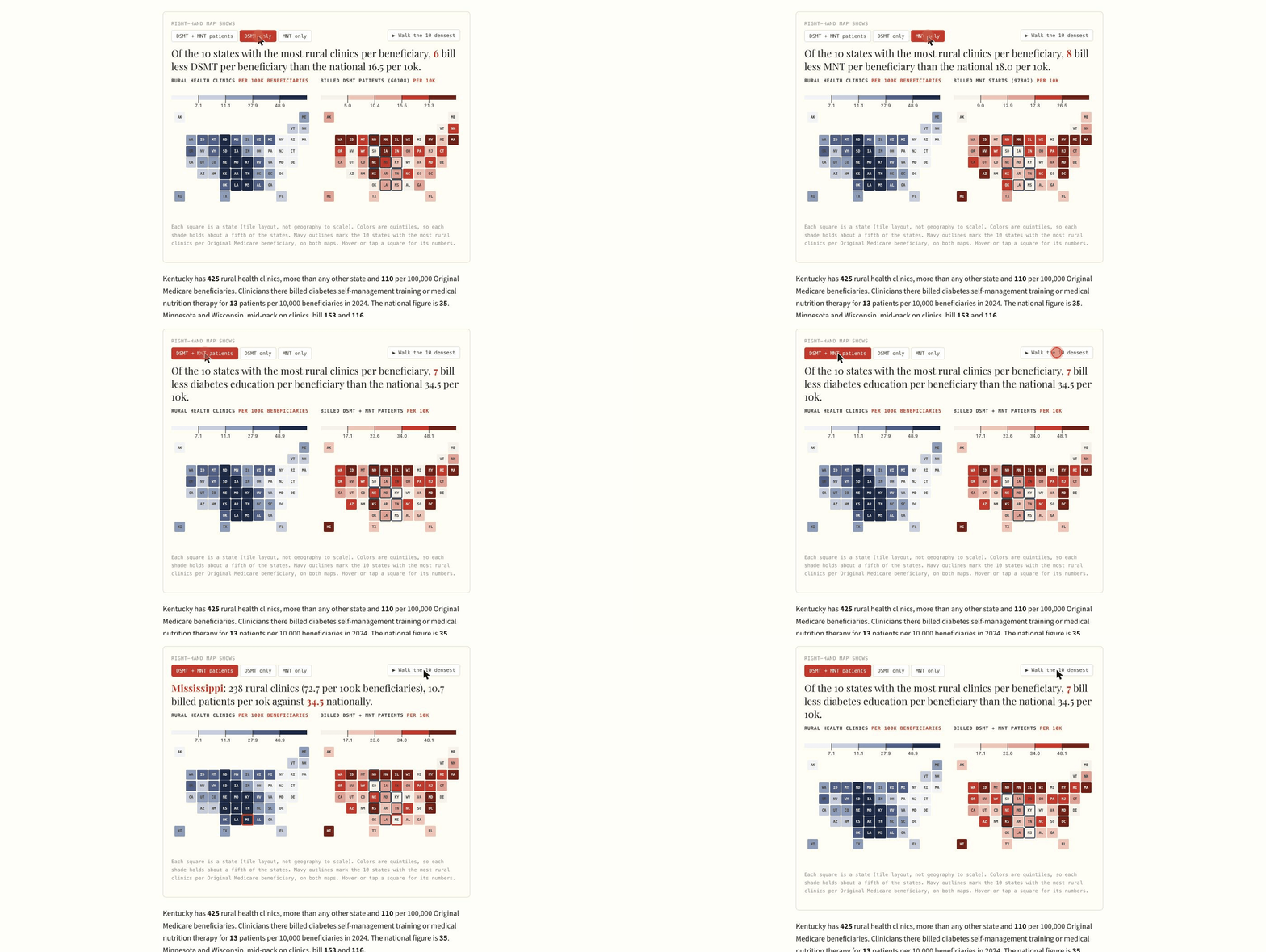
The Rural Educator Gap Explorer: Every state, one dot: rural health clinics per Medicare beneficiary against how many patients clinicians billed for diabetes self-management training or medical nutrition therapy in 2024. Filter, swap the metric, and see whether more RHCs means more billed diabetes education.
Where the Clinics Are, Where the Classes Are: Two maps of the same 51 places: where Medicare’s 5,625 rural health clinics are, and where clinicians billed diabetes self-management training or medical nutrition therapy in 2024. In 2027 those sessions become billable RHC visits. The darkest states on one map are mostly pale on the other.
📡 Radar
A ring company just bought a doctor’s office
Oura will pay $625 million in cash for Counsel Health, whose chatbot hands patients to physicians by telehealth. The deal should close by year-end.
Counsel’s doctors are on its payroll. Members will chat with the AI inside the Oura app, with weeks of ring data attached, then escalate to a physician. Oura has about six million members.
The wearable isn’t sending data to your clinic. It’s bringing its own.
😤 “Sleep scores aren’t vital signs.” They don’t have to be. They only have to start a visit you didn’t schedule.
🎙️ From the Pods
🎙️ Raising Health — “The Next Era of Health Data: AI, Open APIs, and the End of the EHR Oligopoly”
Dr. Tom Keane, the National Coordinator for Health IT, says the next certification rule should let AI read from the record and write back, with “some way to audit it, some way to do a trace.”
🔇 Speaker Blindspot: Planning fallacy. Keane gives a new hospital EHR contender one to two years.
🎙️ Health Tech Nerds Radio — “The Grand Roundup”
The hosts call Medicare’s Shared Savings Program the most consistent value-based program CMS has run, “with a lot of asterisks.”
🔇 Speaker Blindspot: Selection bias. A voluntary program’s savings are counted on the groups that chose to join.
🧪 Evals Desk
AI-written notes change what the next AI reads (arXiv, Nov. 7)
On 300 MIMIC-III admissions, researchers inserted AI-written chart summaries, plus one hedged differential the record didn’t support.
Hospital-course summaries got less accurate than with equal-length human text. The injected overcall showed up in 24.6% of downstream summaries when it was a diagnosis that often travels with the real one (16.1% when unrelated), almost always still hedged, and standard quality metrics didn’t move.
Why it matters: a note can hand the next model a differential the record never supported, and standard metrics won’t see it.
💡 BTW: Dr. Muthu Alagappan, Counsel Health’s founder, made his name as a Stanford student by arguing that basketball has 13 positions, not five.
🩻 Real or AI answer: B is real, A is AI.
The tell: In the fake, the air gap is narrowest at the apex and widest at the base, with the lung edge still sitting down on the diaphragm. On an upright PA film air rises, so the pleural line usually pulls farthest from the chest wall at the top.
Proof: A was made with Nano Banana 2.1 on 2026-11-05 a. B is a published, de-identified teaching image, not patient data: “09-01-Pneumothorax” by Hellerhoff, CC BY-SA 3.0, Wikimedia Commons, resized, shared under the same license.

— Kevin & Fable 5.2
(please verify content for yourself, partially AI generated and may contain errors)