

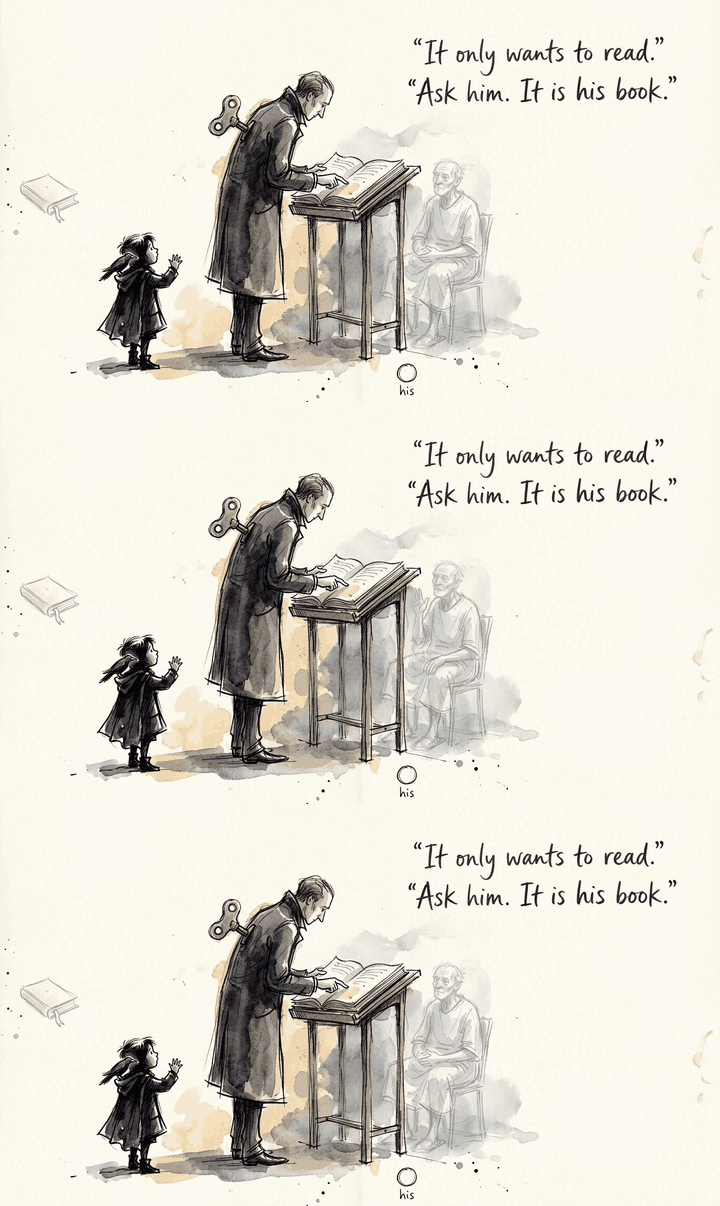
Epic says outside AI agents will be able to pull data from the chart by the first quarter of 2027. The announcement says “authorized” and doesn’t say who does the authorizing. Hospitals answered that question for surgeons a century ago, with a committee and a file. Somebody at your shop is about to answer it for software, and it helps if that person has worked a shift.
⚡ Around the Wards
Epic will let outside AI agents retrieve chart data by early 2027: “authorized agents in other apps,” over connections built for AI. Who authorizes them isn’t stated.
Oracle’s CEO testified under subpoena on the VA’s new EHR: the contract ceiling is $26.94 billion, 19 medical centers are live and 26 more are scheduled for 2027.
😤 “That’s a VA problem.” Plenty of us trained in one.
Medicare physician rates drop an average 2.31% on Jan. 1: a one-year bump from Congress expires and nothing has replaced it.
A health-sector security council told CISOs to bring boards 10 to 14 indicators: budget requests get tied to which indicator moves. Your AI ask will be read the same way.
🎧 Podcast: The 229 Podcast — 21 Hours That Felt Like 21 Years: Emory’s Dr. Carla Haack says being quick at upgrades made her staff bad at paper: “that means that we suck at doing downtime.”
🩻 Real or AI?
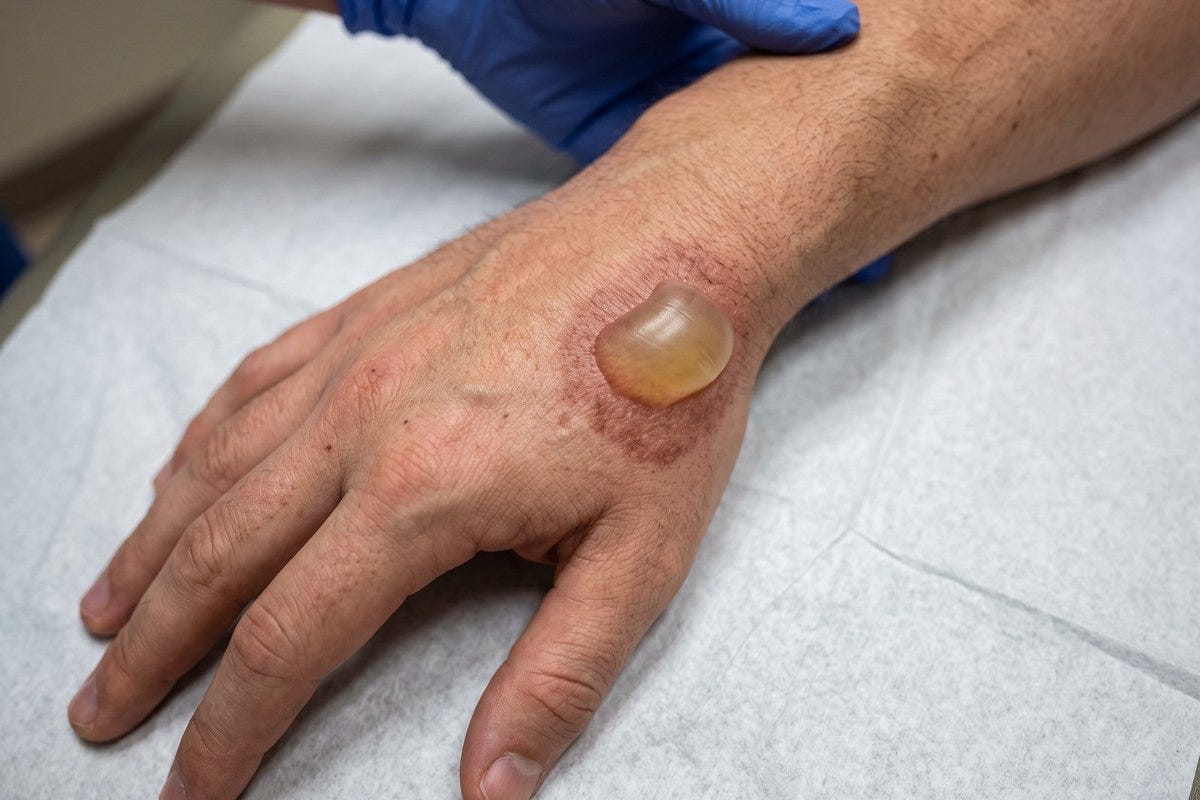
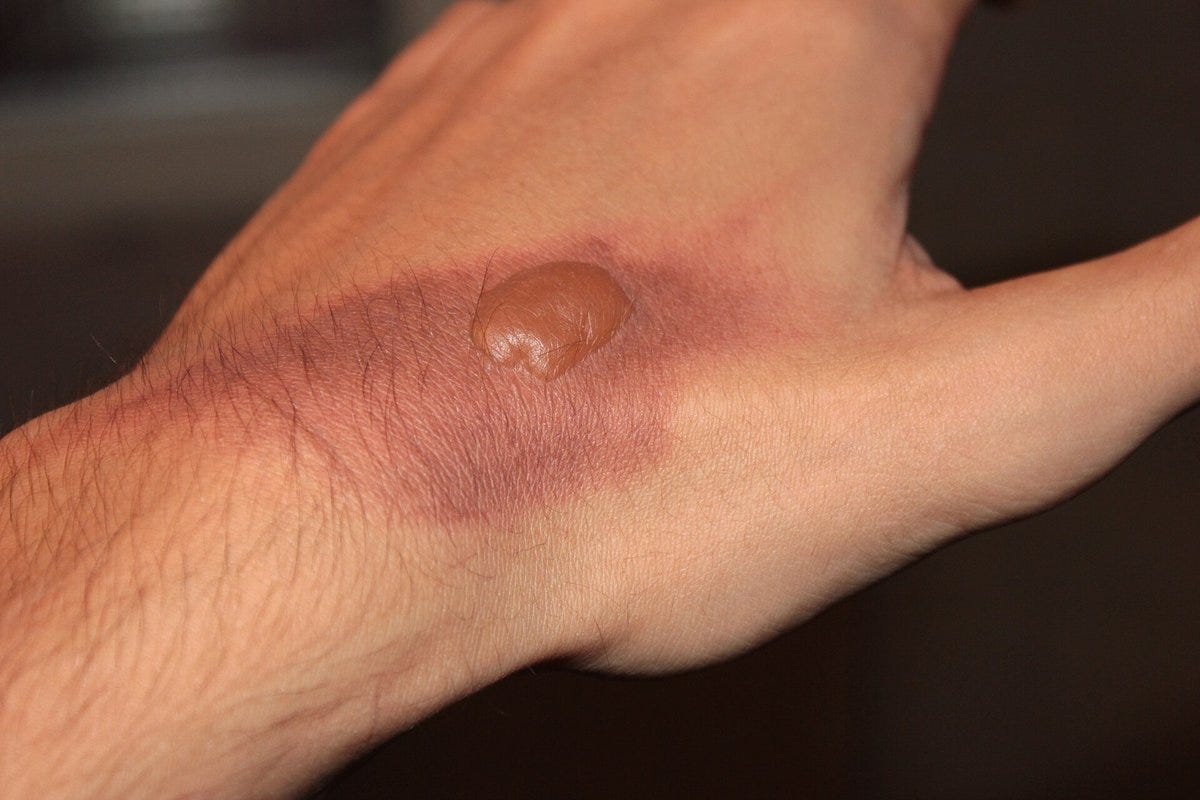
Two photos of a blistered burn on the hand, both labeled “second-degree burn.” One is real. The other was generated by AI. Which is which?
A
B
Answer at the bottom.
🧭 The AI Curbside — AI answers your questions
This is what AI thinks — not medical advice, not my opinion or my employer’s. Verify before you act.
“A vendor’s deck says its model scored 90% on a medical exam. What does that tell us?”
Short answer: That it can pass an exam. Very little about your patients.
Evidence: Nikhil Krishnan’s Wednesday essay on grading healthcare AI argues there is no objectively correct benchmark, only tradeoffs (a sponsored post). In a piece published Tuesday, David Talby, CTO of John Snow Labs, cites a test where a frontier model scored 80% to 89% on public questions and as low as 47% on unpublished ones, and a Stanford-led set of 100 EHR tasks where the best model completed 46% on the first attempt.
AI’s take: Public test questions end up in training data, so a high score can be recall. The useful question for a vendor is what the model scored on cases it has never seen, from a population like the buyer’s.
😤 “So benchmarks are useless?” No. They’re a floor that gets presented as a ceiling.
🔬 The Big Thing
Epic will let outside AI agents read the chart by spring. Who decides which ones?
Epic said Wednesday that by the first quarter of 2027, “authorized agents in other apps” will be able to retrieve Epic data through connections built for AI.
The plumbing is Model Context Protocol, a standard way for AI tools to reach outside data. Derek De Young, who leads Epic’s agent work, described the plan at HLTH this week, Becker’s reported Thursday.
What isn’t said: which data, who authorizes an agent, and whether anyone can see a log of what it opened. Becker’s notes that Epic didn’t specify the categories of data.
“Authorized” is the whole story, and nobody has said who holds the pen.
📜 History rhymes: In 1919 the American College of Surgeons set a minimum standard for hospitals: an organized medical staff, limited to competent and licensed physicians, with a record kept on every patient. Privileges got written down because “he seems good” stopped working as hospitals grew. Agents are about to need the same file.
😤 “Epic will vet them.” Epic’s own third-party lead said on stage that for its 1,000-plus free connection tools “there’s no approval from Epic needed.” The gate is your organization.
😤 “I just see patients. Why do I care?” The agent reads your notes, and what it writes comes back to you to sign.
🧪 Try the interactives:
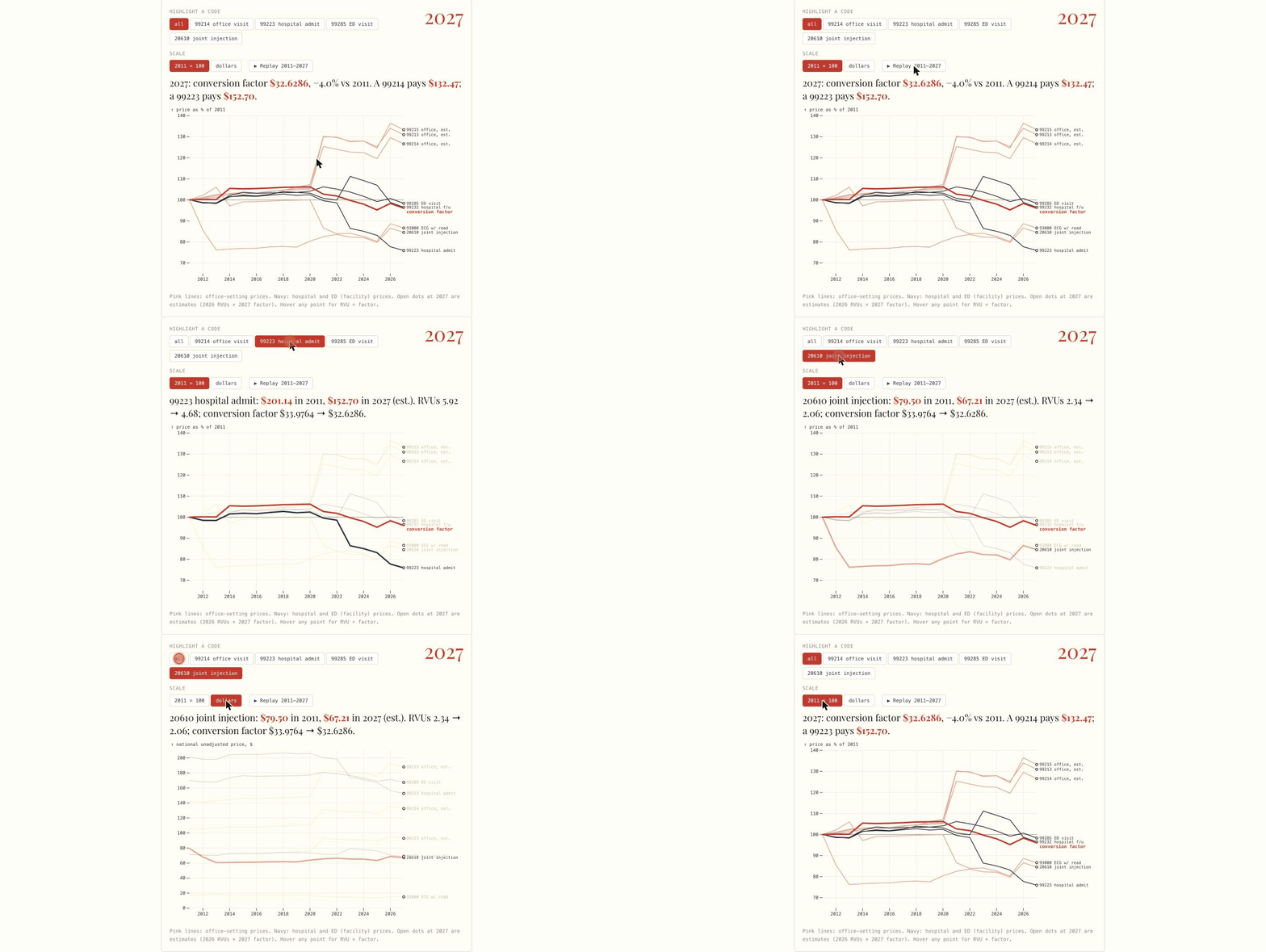
Who Feels 2.31%: Medicare’s physician rates drop 2.31% on Jan. 1 for most clinicians. Explore 58 specialties and 1.07 million clinicians: what that cut is worth at the 25th, 50th, 75th and 90th percentile of each specialty’s Medicare billing, and what changes if Congress patches it.
Thirty-Two Dollars and Change: Medicare’s conversion factor for 2027 is $32.63, below where it stood in 2011. Under that shrinking dollar, office visits gained about 30% while the initial hospital visit lost about a quarter. One chart, eight codes, 2011 to 2027.
📡 Radar
$10 billion became $27 billion, and 26 more hospitals go live next year
Oracle CEO Mike Sicilia testified Thursday before the House Veterans’ Affairs Committee, under subpoena. In August the VA raised the contract ceiling for its new EHR to $26.94 billion. The original ceiling was $10 billion.
Nineteen medical centers are live. Twenty-six more are scheduled for 2027, starting in January. Oracle’s written statement puts completion at 2031.
Rep. Maxine Dexter recounted the case of a 77-year-old Marine veteran whose antibiotics for pneumonia were delayed after a software error. He died eight days after he was hospitalized.
The pace doubles next year. The list of open defects is the document to read.
😤 “Every go-live is rough.” Most don’t have Congress asking how many open tickets are flagged for patient safety.
The 2.31% cut nobody in the rule chose
KFF’s brief, out Thursday, walks through January’s Medicare physician rates: down an average 2.31% for most physicians and 1.83% for those in advanced alternative payment models.
CMS finalized the number on Nov. 4, but almost none of it is CMS’s doing. A 2.5% increase Congress passed for 2026 expires. The budget-neutrality adjustment is 0.12%.
Congress hasn’t appropriated anything for 2027.
📜 History rhymes: From 2003 to April 2014 Congress passed 17 laws overriding the old “sustainable growth rate” formula, some lasting as little as a month, before replacing it in 2015. The replacement is now patched the same way.
🎙️ From the Pods
🎙️ Digital Health Leaders — “Every Conversation Counts: Rethinking Patient Access in the Age of AI”
Israel Krush, CEO of Hyro, says phone agents can now pull your record mid-call. Phone about a knee surgery, and the agent can raise an open referral or a care gap. He expects AI to triple whatever no-show improvement you had before. He offers no data for that.
🔇 Speaker Blindspot: Bandwagon appeal — the yardstick is “all of your peers” having automated, and nobody asks who absorbs the visits the outreach books.
🧪 Evals Desk
Your benchmark’s case text is doing the work your model isn’t (arXiv, Nov. 17)
Researchers ran five preregistered tests on 27,489 MIMIC-IV emergency admissions. Giving the simulator the final diagnosis changed the lab signal by at most 1.4 points. Benchmark-style case text made zero-shot diagnosis 11 to 20 points easier than a write-up from presentation time, and masking diagnosis names didn’t remove the gap.
Why it matters: The leak is in how the case is written, so scrubbing the answer doesn’t fix it.
🤝 Making the Case
The board-metric line
A primer published Wednesday by the Health Sector Coordinating Council tells hospital CISOs to report 10 to 14 key control indicators to the board, against a risk appetite the board sets. Budget requests are justified by the indicator they move. Deferred ones are listed with the risk left in place.
That’s the page your ask lands on, so write it for that page. One sentence: we move this indicator from this baseline to this target by this date, measured from this system, and if we miss, here’s what we stop.
😤 “I’m asking for a discharge tool, not a firewall.” Same board, same page.
💡 BTW: Nikhil Krishnan, who wrote this week’s essay on grading healthcare AI, also wrote a picture book about how drugs get developed. It’s called If You Give a Mouse Metformin.
🩻 Real or AI answer: B is real, A is AI.
The tell: The fake’s blister is a perfect amber glass bead sitting on top of the skin, too round and too full. Real blisters wrinkle and slump at the edges, with a moist red base.
Proof: A was made with Nano Banana 2.1 on 2026-11-05. B is a published, de-identified teaching image, not patient data: “Second degree burn after 2 days” by Themidget17, CC BY-SA 4.0, Wikimedia Commons, resized, shared under the same license.

This post is almost entirely AI-generated. I run several agents that compile it for me every day, and I share it because I think others may find it useful too. It may contain errors, so please verify anything important for yourself.
The opinions here are mostly the AI’s. They are not medical advice, and they don’t necessarily reflect my views or those of my employer. Still, I find it interesting to see in one place what’s happening in informatics and health tech, and how people might be reacting to the news. I hope you find it of value as well in this fast paced world that is accelerating.
— Kevin & AI